
Meat Fabrication Training Workshop
Jul 4, 2019 | Views:209209 |
 Print Version
The small ruminant industry in Trinidad and Tobago has the potential to make a significant dent into the animal protein supply for local consumers. Sheep and goats are well suited to the wide range of geophysical conditions commonly encountered locally. They are able to convert low quality forages and feeds into high quality products; are small in size; use minimal land space and require low capital investment per head, making them the ideal pick for small holder farmers. Where there is no religious or cultural taboos forbidding the eating of meat from small ruminants, their social and traditional importance is well established. They form an integral part of year round regional cuisine with peak periods of consumption associated with celebrations such as weddings, religious events and other cultural activities. Additionally, there is a growing demand for their milk, hides and manure, which can be further explored.
Goat accounts for about 6 percent of red meat consumption worldwide, with the annual per capita consumption for goat weighing in at 1.7 pounds. The highest level of goat meat consumption anywhere in the world is Sudan, where 8.6 pounds of goat is consumed per person annually. The industrialised country with the biggest appetite for goat is China, with 3.5 pounds eaten per capita each year. Trinidad and Tobago up to recently, have spent over $900,000 US dollars for the importation of goat meat. “Goats are noble creatures of great utility, and it’s time someone put some work into their PR,” James Whetlor, Chef and Founder of goat meat producer Cabrito, said in the introduction to his book, Goat: Cooking and Eating. Many people, including Whetlor, think we can reform our animal-based protein production process by switching our eating habits to goat meat. Not only is goat often referred to as the healthiest of red meats, but goats can also leave the land a little better than they found it, since they subsist on the weeds other animals ignore.
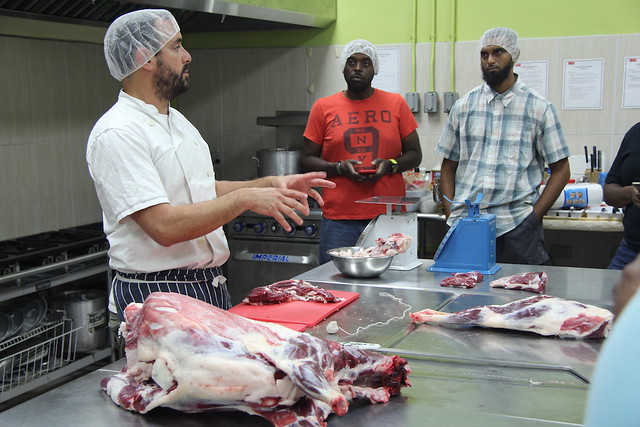
One major challenge that local producers face is the price received for their final product. The issue is compounded by the fact that there are no grades and standards in place as yet for small ruminant meat as could be found in other places of the world and ‘Trinbagonians’ only curry their meat. One way of addressing the challenge is by selling specialised cuts of meat instead of a whole carcass. There is a standard market price for a small ruminant carcass sold intact (whether $30/lb, $35/lb). However, with specialised cuts (loin, shoulder, ribs etc.) the local producer may fetch a higher price/animal, redounding to greater economic gains. Additionally, there is a need to sensitise the public that goat meat can be prepared in many more ways than just currying. With the aforementioned, the Workshop hosted in collaboration with the Trinidad and Tobago Goat and Sheep Society was geared towards addressing the challenge faced by local producers.
Related Gallery

Gallery: ECIAF Meat Fabrication and Training
More Results


