
UTT's Agriculture and Animal Science students have life-transforming experience at West Virginia University
Dec 12, 2017 | Views:209149 |
 Print Version
Background:
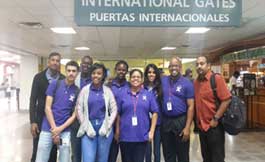
Seven students (Shanice Garner, Crystal Ettienne-Sandy, Joshua Jabez Johnson, Justin Dookie, Ruandell King, AnnMarie Henry, Kelly Seelall) and one faculty member (Reeza Ramgattie) from the ECIAF Campus, UTT embarked on a two-week study tour in the United States of America at West Virginia University (WVU) in September 2017.
West Virginia University in collaboration with the University of Trinidad and Tobago submitted a proposal to the 100,000 Strong in the Americas; this study tour was funded under this initiative. The collaboration between WVU and the UTT represented one of the furtherance of the MOU signed by both universities back in January 2016.
100,000 Strong in the Americas was established to increase international study in Latin America and the Caribbean. The objective of this grant is to encourage region-wide development through greater international exchange students, who are our future leaders and innovators. One Health, One World was the theme used in the proposal submitted by WVU and UTT and it was geared towards creating an interdisciplinary student service exchange. This project encouraged the collaboration between multiple disciplines working locally, nationally and globally to achieve the best health for people, animals and the environment.
Highlights and Impact:
The UTT team participated in a hands-on program consisting of field tours, discussions and learning about animal management practices facilitated by West Virginia University's faculty, led by Reproductive Physiologist, Dr. Marlon Knights. The team also had the opportunity to participate in service - learning activities at animal shelters, environmental organisations and tours of various farms, agro-processing, agricultural and administration facilities at West Virginia and surrounding areas. Features of the study tour include:
i. Visiting the President of West Virginia University
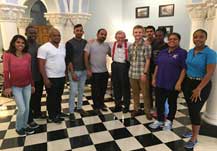
During the stay at West Virginia, the UTT's delegation had the distinct privilege to meet Dr. E. Gordon Gee. Whilst this was an unscheduled activity nonetheless the President took time off to interact with the team. The interaction while brief was productive as the President expressed interest in furthering WVU's existing partnership with UTT.
ii. Service - Learning Activities and Recruitment
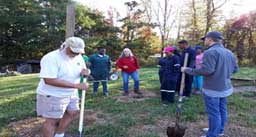
The UTT students had the opportunity to work alongside the team from West Virginia in assisting with the restoration of a house which will be used as a therapy center for the elderly. Further to this the UTT's team spent time at a home work center in West Virginia. This facility is designed to provide after school meals and support for children who are in need of such.
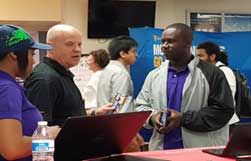
Our students had the opportunity to promote UTT as part of the exchange programme. They utilised this opportunity to highlight many of the programmes offered at the UTT and spoke with interested persons.
iii. Farm Vists
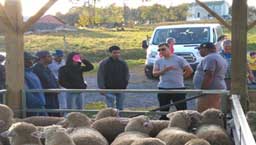
here were many visits to both crop and livestock farms and the students had the opportunity to participate in farming activities. The scale of production was significantly different to what is done in Trinidad and Tobago, nonetheless everyone had an insight in how involved the family is in their farm operation, which is heavily mechanised.
iv. Visit with Dr. Elliot 'Ellie' Mannette (father of modern day steelpan instrument)

Coming from the island of Trinidad and Tobago, the students had a genuine appreciation for meeting Dr. Mannette who provided a rich and deep historical background to our national instrument. He took the team through the pages of his life, identifying signposts of the journey into the development of the steelpan. Like a concerned teacher he admonished and charged the students to continue walking with integrity and be upholders of principles and accurate values.
Productivity:
Students as well as faculty member from the UTT returned to Trinidad with a wealth of knowledge gained during the two-weeks spent at WVU. Their scope and sight have been broadened and they were able to see a world beyond the boundaries of Trinidad and Tobago. The experience allowed them to have a greater appreciation for their areas of study (Agriculture and Animal Science); and it is clear that this experience will be used to add to the development of the ECIAF Campus and the agricultural sector in Trinidad and Tobago!
Excerpts of the feedback from some of the students are presented below:
Shanice Garner (Diploma in Agriculture - UTT)
I am currently a Year 2 Agriculture student at the University of Trinidad and Tobago. Upon my arrival to West Virginia, I must admit I was quite anxious because of the change of environment and cultural differences but everything about the visit exceeded my expectations like the hospitality and friendliness of the people which was exquisite.
During our stay, we had the opportunity of attending lectures at the Davis College of Agriculture, Natural Resources and Design done by Dr. Marlon Knights. We visited many farms during the visit and the one thing that stood out for me was all the farms are family-owned…..this was truly an educational visit I learnt about so much in such a short period of time, which has really enhanced my continued interest in the field of agriculture and its advancement in Trinidad and Tobago.
Crystal Ettienne-Sandy (B.Ed - UTT)
The West Virginia Visiting Scholar Student Exchange was a really a tremendous and unforgettable experience for me. Then, from day to day exposure to the Agriculture diversification of West Virginia, I observed how Agriculture, specifically natives' attitudes towards Livestock production is depicted. It is more of a passion rather than an obligation also, most members of all the farming households were collaborating as a unit in comparison to Trinidad and Tobago's farming culture, where it is so seldom to observe the entire family unit, working together on farms, livestock farms. This was very impressionable to me.
Personally, I have benefitted from this trip in that, my knowledge of expanded, viewing a different aspect of the world. More evidently, this trip has opened a very invigorating opportunity for me, in that, based on my experience, I was invited to make a presentation at the Valsayn Campus, U.T.T. on the 15th October, 2017, for World Food Day pertaining to Agriculture. From observing Agriculture in West Virginia I was enabled to make the connecting link and draw educating highlights of Agricultural development, from a local and global perspective. From this, I got the opportunity to meet the Vice president of the United Nations Association of Trinidad and Tobago (UNATT), joining the organization and, newly playing a vital part in an upcoming Agricultural project, with this organization.
Kelly Seelall (BSc. Animal Science - UTT)
My experience at West Virginia was a very unique and innovative. I was able to witness a difference in the culture, environment and the way in which farmers conduct activities in comparison to Trinidad and Tobago. This experience really opened up my eyes to see the potential of the livestock sector and how improvement in technology can impact on the time taken to conduct farm management activities.
If these things are taken into consideration and integrated into Trinidad and Tobago's livestock sector, I do believe that it would definitely improve the sector very rapidly. Although I also believe that a constraint for some farmers may be the funding for such technology, in the long run it will increase productivity and income.
Overall, it was an experience that I will never forget and I am very thankful for. It definitely showed me the possibilities outside of Trinidad and Tobago and what can be done to bring these systems and activities into Trinidad and Tobago to help improve both the livestock sector and Trinidad and Tobago in general.
Acknowledgement:
The delegates from the University of Trinidad and Tobago will like to thank everyone who assisted in making this venture a success:
- International Office Grant and Funding Unit (IOGF), UTT
- Dr. Marlon Knights and team - WVU
- Dr. Kristi Wood-Turner and team - WVU
- Global Affairs Office - West Virginia
- Dr Marcus Ramdwar - UTT
More Results


