
Food Science and Techonology: Diploma Students learn to make Cured-Smoked Chicken
Apr 15, 2016 | Views:208723 |
 Print Version
The Food Technology Diploma Agro-Processing 1-Meat, Fish and Poultry class learned the stitch pumping method of curing meat, which involves the use of a syringe to inject the brine (salt, water, sodium nitrate) solution into the meat. This makes the meat juicier, tenderer, and improves the flavour along with preserving the meat by the lowering water activity. The low levels of salt enhance the other natural flavours of poultry.
The students washed, cleaned and wiped dry the chicken. Then using a large syringe, the brine solution was injected into numerous locations of the chicken to ensure distribution into all parts of the carcass.
The most common area of spoilage is along the bone, thus the curing solution was injected along the bone structure.
After brine was injected into the carcass, the carcass was placed to pickle in the remnant brine solution. To remove excess salt before smoking the chickens were washed using cool tap water for approximately 30 minutes. They were drip dried for 30 minutes before being placed into the smoker.
Did you know that “smoking” meat is another form of preservation? Smoking helps seal the outer layer of the food being cured, making it more difficult for bacteria to enter.
Fun Fact: Sodium nitrite, which occurs in green leafy vegetables like lettuce, spinach, and celery, is very useful for food preservation because it is one of the few compounds that will retard the growth of a very dangerous bacterium called clostridium botulinum. Furthermore, sodium nitrite will lend its own unique flavour to the meat and cause it to turn an appealing shade of pink. Whether added in the form of celery juice (or some other leafy green vegetable extract), or by using ‘pink salt,’ a mixture of 93.75% table salt and 6.25% sodium nitrite is usually used to preserve meat. Additionally, nitrites are toxic in high doses, so their addition to any curing formula must be handled carefully.
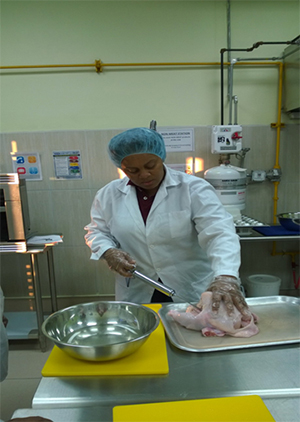
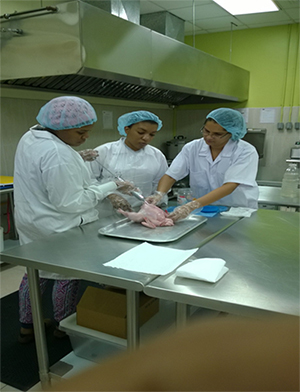
Picture 1: Student injecting brine Picture 2: Lecturer guiding the process
More Results


