
A Technical Study on the Power Output of Vertical and Horizontal Axis Turbines for Underwater Current Harvesting in...
Apr 16, 2024 | Views:208834 |
 Print Version

Office of Research, Impact and Postgraduate Studies
presents an Upgrade Seminar on
A Technical Study on the Power Output of Vertical and Horizontal Axis Turbines for Underwater Current Harvesting in Trinidad and Tobago
by Ms. Darielle Roberts
Underwater Current Harvesting (UCH) emerges as a promising frontier in the Ocean Energy Industry, aiming to harness the energy potential of oceanic currents driven by gravitational forces, wind patterns (Coriolis Effect), and variations in water density.
These currents exhibit consistent and predictable movements in both horizontal and vertical directions, presenting a viable renewable energy source. UCH employs specialised technology to capture and convert this energy into electricity, targeting primarily horizontal currents and vertical shifts, such as upwelling or downwelling.
Trinidad and Tobago, situated in the Caribbean Sea, features significant oceanic currents, particularly along its western coastline. Leveraging data from the HYCOM database and considering the proximity of shipping routes traversing the region, this study investigates the sustainability and feasibility of UCH implementation in Trinidad and Tobago's maritime domain.
Analysis of HYCOM-derived data indicates the presence of oceanic currents ranging from 2m/s to 10m/s off the western shores of Trinidad, throughout the year. These findings suggest ample potential for UCH development in the region. Expert surveys conducted as part of this research further validate the viability of, and need for UCH implementation, underscoring the urgent need for continued exploration and advancement in this burgeoning sector.
The findings of this study hold significant implications for both academia and industry. From an academic standpoint, this research contributes to the understanding of oceanic currents in the Caribbean region, shedding light on their sustainability and potential for renewable energy extraction. Furthermore, the utilisation of HYCOM data highlights the efficacy of remote sensing techniques in studying marine environments, and underscores the importance of interdisciplinary approaches in ocean energy research.
From an industrial perspective, the identification of viable UCH sites in Trinidad and Tobago presents lucrative opportunities for renewable energy developers and investors. With supportive oceanic conditions and promising energy yields, the region stands poised to become a hub for UCH projects, contributing to its energy diversification goals and reducing reliance on traditional fossil fuels. However, several challenges and considerations must be addressed to fully realise the potential of UCH in Trinidad and Tobago. These include technological refinement to optimise energy capture efficiency, environmental impact assessments to mitigate ecological consequences, and regulatory frameworks to ensure sustainable development and equitable distribution of benefits.
In conclusion, this study underscores the significance of underwater current harvesting as a renewable energy solution, and highlights Trinidad and Tobago's potential as a prime location for UCH implementation. The study shows the technical viability of the project and laments the need for further research and development. By leveraging oceanic resources sustainably, the nation can foster economic growth, reduce carbon emissions, and contribute to global efforts towards a cleaner and more resilient energy future.
Tuesday 16th April, 2024 at 2:30 p.m.

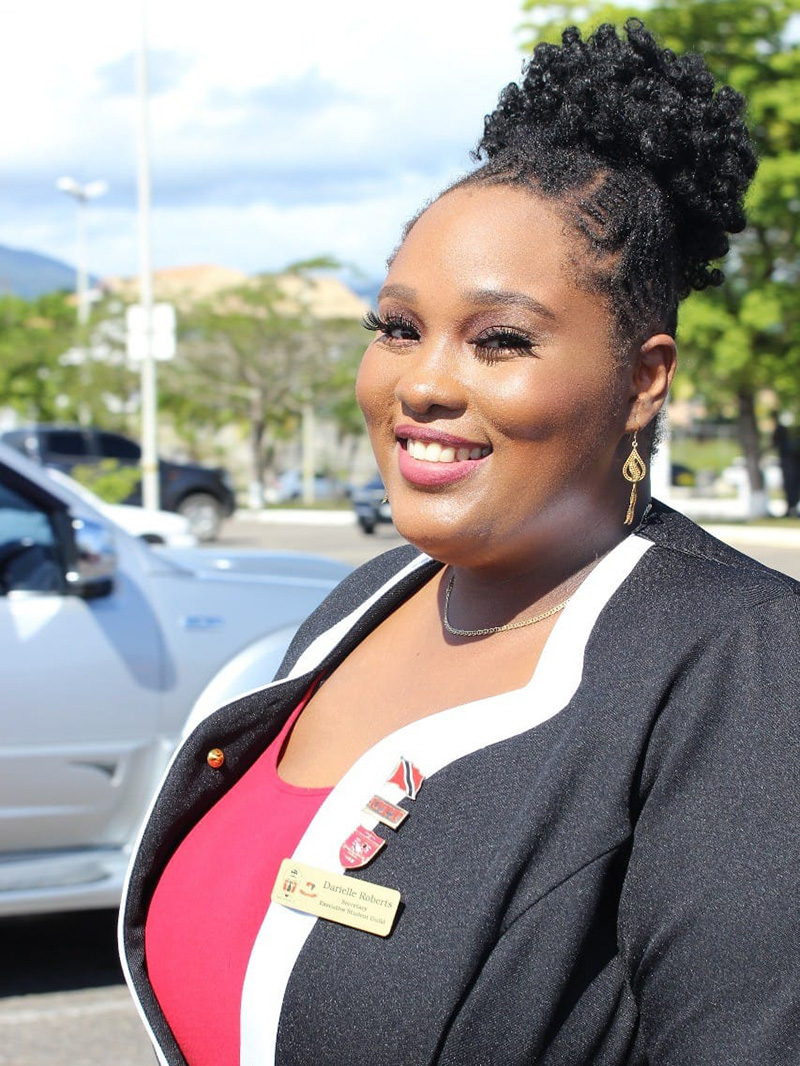
Born and raised amidst the vibrant landscapes of Trinidad, Ms Darielle Roberts has embarked on a journey filled with adventure, resilience, and unwavering determination.
From humble beginnings, she navigated the complexities of life with grace and fortitude, overcoming obstacles and embracing opportunities along the way. Guided by a relentless pursuit of knowledge, unwavering support from her parents and siblings, and a passion for personal growth, she embarked on a quest to carve out her own unique path in the world.
Ms Roberts is a full-time production assistant in the oil and gas sector and a part-time teacher at just twenty-five years old. She dedicates her time to helping the upcoming generations find their passion and purpose in life, and doing research for the development of the energy sector in Trinidad and Tobago. She holds a Bachelor of Applied Science (B.A.Sc.) in Process Engineering from The University of Trinidad and Tobago (UTT), where she graduated in 2020, and she is currently a Master of Philosophy (M.Phil.) candidate at UTT. Her research is focused on energy engineering with emphasis on Underwater Current Harvesting. Ms Roberts’ goal is to develop the technology that will assist in transforming the energy sector in Trinidad and Tobago by tapping into our natural ocean resource. Her goal is to aid in powering offshore rigs and reducing their carbon emissions and dependency on diesel powered generators.
Ms Roberts continues to devote her time to engineering research, tutoring, mentoring, and debating. She has been a tutor in the private secondary school sector for the past five years and continues to be passionate about education and the holistic development of our upcoming generations. She is also an advocate for youth empowerment through politics as she is a firm believer in the statement, "The youth are the leaders of tomorrow."
More Results


