
Postcolonial Ritual Theatre and Performance: An Investigation of the Jouvay Popular Theatre Process...
Apr 17, 2024 | Views:209368 |
 Print Version

Office of Research, Impact and Postgraduate Studies
presents
Postcolonial Ritual Theatre and Performance: An Investigation of the Jouvay Popular Theatre Process (JPTP) in Trinidad and Tobago: Methodology Challenges
by Ms. Susan B. Sandiford
Myriad theatrical and performance models have evolved from several parts of the world with no significant examination of Caribbean models that have emerged as a result of slavery, apprenticeship, emancipation, and indentureship, in post-colonial societies. As such, this research seeks to introduce and examine, one such model, the Jouvay Popular Theatre Process (JPTP). Developed by Tony Hall, this theatrical process emerged from post-colonial, popular theatre, and performance theories, Caribbean history and culture and in particular the Trinidad and Tobago Carnival jouvay.
The process, through improvisations inclusive of all performing arts media explores traditional carnival masquerade as prototypes and archetypes, which serve as building blocks for artistic performances. The three main steps of the process traverse the historical and social contexts of the masquerades, from which participants locate their traditional character, which culminates in brief improvised performances, which can be further developed as full products. The method seeks to liberate and empower, while structuring identity. Thus, the jouvay ritual of covering bodies with paint, oil or mud, or all, and its traditional characters and performances serve as a liminal act of transformation and rebirth.
Consequently, this research will, via a mixed method approach based on transformative theory and ethnographic approach, use questionnaires, semi-structured interviews and workshops, seek to investigate the JPTP as an indigenous performance process for the performing arts in post-colonial Trinidad and Tobago, the Caribbean and its possible global implications, to create performances that are more reflective of the dynamic Caribbean multidimensional experiences.
Friday 19th April, 2024 at 10:30 a.m.

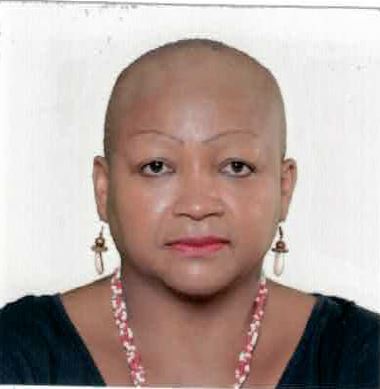
Ms SUSAN B. SANDIFORD was part of the first cohort of graduates of the University of the West Indies’ (UWI) Certificate in Theatre Arts and Practitioner in Theatre Arts programmes, based in the Creative Arts Centre at St. Augustine campus in 1988 and 1992.
It was during this time that her passion for indigenous theatrical forms and expressions emerged, bolstered by her participation in the Popular Theatre course, where she was introduced to the Jouvay Popular Theatre Process (JPTP), facilitated by Tony Hall. For her final project, based on character building, she presented the character Jean, based on interviews conducted with former prostitute, Jean In Town. This resulted in her role as researcher and improviser of the regionally and internationally performed play Jean and Dinah: … Speak Their Mind Publicly Calypso, with Tony Hall and Rhoma Spencer, based on the JPTP. This play was successful at the Cacique Awards in 1994-95.
Her work in the Prime Minister’s Best Village Competition solidified her skills as theatre director. She also served as a Calypso Judge with the Trinbago Unified Calypso Organisation (TUCO).
She holds a Bachelor of Arts in Literature from UWI, and a Master of Information Studies from the University of Toronto in Library and Information Studies. She worked as a Library Assistant and Librarian with the National Library and Information System Authority (NALIS) for 21 years, a Librarian with the Institute Marine Affairs for three years, and has been a Campus Librarian with The University of Trinidad and Tobago (UTT) for the past 17 years. Ms Sandiford has also been Acting Chief Librarian at UTT for more than two years. During this time, she also served as an Adjunct Faculty member in the Associate Library Degree programme at the College of Science, Technology and Applied Arts of Trinidad & Tobago (COSTAATT) for approximately ten years.
Ms Sandiford seeks to research the JPTP as a possible indigenous theatre model for infusing theatre and organisations with new and vibrant productions and possible social solutions, rooted in the ethos of traditional carnival masquerades.
More Results


