
Higher Education Faculty as Digital Content Creators: A Mixed Methods Study on Perspectives, Experiences and Motivation
Apr 9, 2025 | Views:1410 |
 Print Version

Office of Research, Impact and Postgraduate Studies
presents a Postgraduate Seminar titled
Higher Education Faculty as Digital Content Creators: A Mixed Methods Study on Perspectives, Experiences and Motivation
by Mr Christopher Francique
The twenty-first century has seen an unprecedented growth in innovation, creation and usage of technologies, transforming many sectors globally, including education. While there is an increasing trend of digital resources used in education, some faculty members rely on external resources such as textbook publishers or instructional designers for content creation support rather than developing their own digital resources.
This study explored the perspectives, experiences and willingness of faculty members across three universities in Trinidad and Tobago, to create digital resources for courses they teach. Additionally, the study investigated the relationship between faculty members’ digital competence and their willingness to create digital content.
This study utilised a complex mixed methods (MM) design, specifically an Explanatory Sequential Design Intersecting with a Mixed Methods Experimental Design. The data were collected over several stages: a pre-training (quasi-experiment) survey, an asynchronous training intervention (quasi-experiment), a post-training survey, and focus group sessions.
Preliminary results from the data collected suggest the following:
-
The majority of study participants – 80% of respondents (100 out of 126 respondents) – indicated that faculty should either create or edit digital resources for their courses. Focus group feedback revealed that this perception stems from faculty’s recognition of the widespread use of technology among students and its essential role in the twenty-first century.
-
There was generally no statistically significant relationship between faculty’s years of teaching experience and their willingness to create digital resources.
-
There were statistically significant relationships between a faculty member’s digital competence in content creation and their willingness to create digital resources.
-
There was no statistically significant change in faculty’s willingness to create digital resources after the intervention (training). However, there was a statistically significant change (negative) in their willingness to accept technical support to create digital resources.
-
Faculty considered the training useful and immediately impactful.
These preliminary results seem to suggest that while training may not directly increase faculty willingness to create digital resources, it can reduce their reliance on synchronous technical support. This emphasises the importance of continuous professional development and support systems to encourage digital resource creation.
Wednesday 9th April, 2025 at 1:00 p.m.

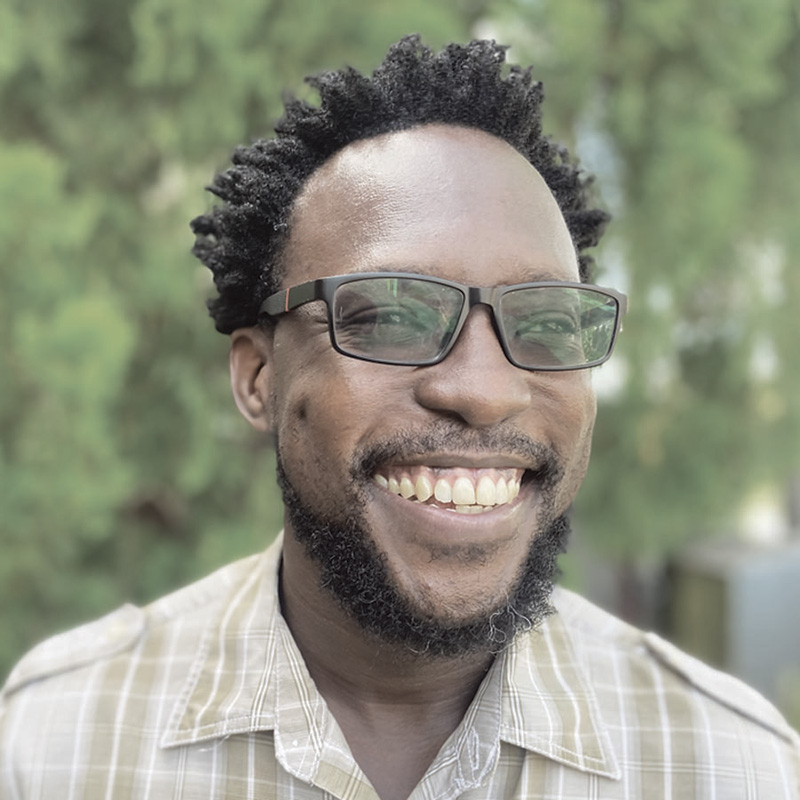
Mr Christopher Francique has been a multi-disciplinary individual within the domain of higher education for the past decade and a half. His expertise spans two disciplines: economics & educational technology, with a Master of Science (M.Sc.) in Economics, from the University of the West Indies, and a Master of Education (M. Ed.) in Educational Technology, from UTT. Mr. Francique’s experience includes: lecturing, academic administration and leadership, technical development and economic research.
In a professional capacity, his areas of expertise are eLearning, interactive web development, multimedia learning, instructional design, instructional technologies, multimedia content creation, digital competence in education, and sustainable economic development. Additionally, his academic and technical interests are in adaptive learning and generative artificial intelligence.
Currently, he functions as the Manager of the Instructional Support and Course Re-Design sub-unit of the Teaching, Learning and Instructional Support (TLIS) Unit, at UTT. There he manages a team of instructional design and technology personnel, that supports TLIS’ stakeholders.
Throughout his career, Mr Francique has served on a wide range of committees. Recently, he served on the National Advisory Council for Education within the Ministry of Education, from 2021 to 2023. There he served as a general committee member, as well as the lead of the Digital Transformation sub-committee. For the past two years, he has been a member of the Teaching and Learning Advisory Committee for EDUCAUSE, a US-based Higher Education-focused, IT/Edtech-related nonprofit organisation.
Passionate about course design and content creation in Higher Education, Mr Francique is pursuing his Doctor of Philosophy (Ph.D.) in Education, focusing on the content development aspect of Instructional Design.
More Results


