
Congratulations on Embarking on Your MPhil/PhD Journey! This guide is designed to help you navigate your way through the various stages of your programme, offering valuable insights and tips for a successful and fulfilling research experience as shown in Figure 6.
1. Setting Clear Goals
- Define your research interests and objectives early on.
- Establish short-term and long-term goals for your academic and research endeavours.
2. Choosing the Right Supervisor
- Select a supervisor who aligns with your research interests.
- Ensure good communication and a positive working relationship.
3. Crafting a Robust Research Proposal
- Develop a well-defined and compelling research proposal.
- Clearly outline your research questions, methodology, and expected contributions.
4. Rigorous Literature Review
- Conduct a thorough literature review to understand existing research in your field.
- Identify gaps and areas where your research can contribute.
5. Developing a Realistic Timeline
- Create a detailed timeline for your journey, including coursework, research, and writing.
- Break down your research into manageable milestones.
6. Embracing Challenges
- Be prepared for setbacks and challenges.
- View challenges as opportunities for growth and learning.
7. Building a Supportive Network
- Cultivate relationships with fellow MPhil and PhD students, faculty, and professionals.
- Attend conferences and workshops to expand your network.
8. Effective Time Management
- Prioritise tasks based on importance and deadlines.
- Balance research, coursework, and personal life effectively.
9. Staying Organised
- Use tools and systems to stay organised, such as digital calendars and project management apps.
- Keep track of references and research materials.
10. Seeking Feedback Actively
- Regularly seek feedback from your supervisor and peers.
- Embrace constructive criticism as a means of improvement.
11. Adhering to Ethical Guidelines
Please refer to the policy on Ethics in Research.
- Follow ethical standards in your research, ensuring participant confidentiality and data integrity.
- Familiarise yourself with the ethical review process.
12. Embracing Continuous Learning
- Stay updated on advancements in your field through journals, conferences, and seminars.
- Attend workshops or courses that enhance your research and professional skills.
13. Balancing Well-Being
- Prioritise mental and physical well-being.
- Take breaks and engage in activities outside academia to recharge.
14. Preparing for the Oral Defence
- Start preparing early for your oral defence.
- Revisit your research, anticipate questions, and practice your presentation.
15. Celebrating Achievements
- Acknowledge and celebrate both small and significant achievements.
- Reflect on your progress and growth throughout the PhD journey.
Remember, your MPhil/PhD degree experience is unique and transformative. While challenges may arise, each step forward is a significant accomplishment. Stay focused, stay curious, and enjoy the intellectual journey ahead!
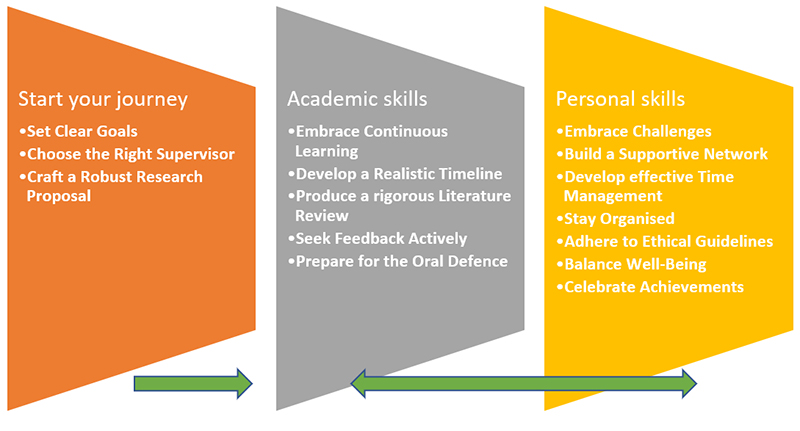
Figure 6: Charting Your Path to your MPhil or PhD
Selection of the Supervisor and Advisory Committee
Immediately after being accepted onto a postgraduate programme, a member of postgraduate faculty, with an appropriate background of research, will be assigned to the student from the home department, institute, or centre. The supervisor shall be nominated by the postgraduate committee of the host department, institute, or unit in consultation with its Programme Leader and appointed by the AVP-RIPS.
The initial assignment may, however, be provisional in nature. Where a more suitable supervisor is found, they may take on the role of the student’s supervisor or co-supervisor. The supervisor must be from the programme in which the student is registered. They will confer with the student to determine what courses, and other work, should be undertaken based on the requirements of the postgraduate programme, and shall convene at least one meeting per Semester or during the May-August period with the Advisory Committee to assess student progress.
Supervisors must be full-time members of staff of UTT; co-supervisors, if required, shall be suitably qualified persons from UTT, from some other suitable institution, or from industry with appropriate qualifications. A staff member registered for a postgraduate degree shall not normally be appointed as a supervisor.
The supervision of research students at UTT is a collaborative process involving two or more advisors. This collaboration aims to provide students with guidance, support, and a structured framework for their research endeavours. Here is an overview of the key aspects of supervision in MPhil and PhD programmes:
Allocation of Supervisors
- Each research student is allocated a principal (lead) supervisor and, in most cases, an assistant (or co-) supervisor at the point of admission.
- The principal supervisor takes the lead role, directing the student's work and managing administrative procedures.
- Co-supervisors are fully engaged in the student's work but are not responsible for administrative matters.
- Assistant supervisors may have varying levels of involvement, ranging from occasional meetings to active participation in specific aspects of the research.
Roles of Supervisors
Supervisors play critical roles in guiding the student's research journey. This includes:
- Agreeing on a suitable field of study and providing training.
- Reviewing and offering feedback on written work, from literature reviews to the final thesis draft.
- Ensuring the annual review of progress is conducted and reported.
- Assisting in effective research planning and management.
- Acting as the first point of contact for any issues or discussions.
- Applying for necessary concessions (e.g., extensions or interruptions of studies).
- Offering guidance on academic publishing, career paths, and providing references for job applications.
Communication and Meetings
Regular communication and meetings between students and supervisors are essential. Supervisors should know how to reach the student at all times, and both parties are responsible for staying in contact throughout the study period. Meetings should be scheduled regularly, and correspondence exchanged, especially if the student is away for fieldwork.
Supervision Styles
Supervisors may have different styles, ranging from frequent, structured meetings to more informal approaches. Styles can be directive or more encouraging and enabling, depending on the preferences of both parties. The supervisory relationship evolves, and flexibility is key to adapting to the student's needs over the course of the programme.
Supervision Support
While occasional disagreements are normal, any serious issues should be addressed promptly. The second supervisor provides an alternative perspective, and fellow students or teaching staff can offer informal support. In case of serious problems, students can approach the other members of their Advisory Committee, their Programme Leader, the AVP-RIPS, student representatives, or the School Postgraduate Office for guidance.
Notes of Meetings
Students are required to keep notes of key supervision meetings to record action points and confirm their understanding of discussions. Supervisors should also record meetings on the student record for reference.
Effective supervision is crucial to the success of research students, and a collaborative and supportive relationship between students and supervisors enhances the overall research experience.
Formation of the Advisory Committee (Data Capture Form)
The selection of your Advisory Committee is an important component of your postgraduate education since it will help you in times of academic need. Your Advisory Committee will assist you in developing your programme of study and research as well as during the write-up of your thesis or dissertation.
Work with your supervisor and other members of your host department, institute, or unit to establish your committee. Begin thinking about your committee’s make-up as soon as you commence coursework. Interact with your course professors and other postgraduate students to learn about other faculty.
In formulating your committee, look for a good “fit” – have a clear picture of your own personality, interests, and goals and use these to help in the selection of suitable committee members. Never be afraid to seek the advice of your supervisor or other members of academic staff both within and outside of your host department, institute, or unit.
Advisory Committee members must have qualifications equal to or above that of the degree followed and must have been approved by the AVP-RIPS as being a member of Postgraduate Faculty. Your supervisor must agree to the final make-up of your Committee, which shall comprise a minimum of three (master degrees) and a maximum of five (MPhil, PhD) members inclusive of the supervisor and co-supervisor, if there is one. The supervisor shall be the Chair of the Advisory Committee.
At least 50% of the Advisory Committee membership must be from UTT. All other Committee members must be approved by the AVP-RIPS on a case-by-case basis. All requests must include a current copy of the proposed Committee member’s curriculum vitae.
Your Advisory Committee must be in place before you can complete your Plan of Study. Advisory Committees for MPhil and PhD candidates should be in place no later than the end of the second semester of the first year of registration.
Formation of the Advisory Committee
In the process of forming the Advisory Committee for a research project, particularly for MPhil and PhD programmes, a specific procedure is followed and a data capture form is used. The following applies:
Committee Composition
- The Advisory Committee consists of a minimum of three members and a maximum of five members, inclusive of the Supervisor and Co-Supervisor.
- This includes both internal (from UTT) and external members.
- Can include: One Supervisor, Co-Supervisor, UTT Advisory Committee Members, and External Advisory Committee Members.
- The Supervisor serves as the Chair of the Advisory Committee.
Membership Breakdown
1. Supervisor
- The primary supervisor must be a member of academic staff at UTT.
2. Co-Supervisor
- The inclusion of a co-supervisor is optional.
- The co-supervisor can be either internal to UTT or external to UTT.
3. UTT Advisory Committee Members
- A maximum of two members from UTT can be included in the committee.
- It is recommended that at least one committee member be from a postgraduate programme other than the programme in which the student is registered.
4. External Advisory Committee Members
- The inclusion of external Advisory Committee members is optional.
- A maximum of two external members can be part of the committee.
Data Capture Form
- A specific data capture form is utilised to capture essential information about each committee member.
- This form includes details such as name, affiliation, role (Supervisor, Co-Supervisor, UTT Advisory Committee Member, External Advisory Committee Member), and other relevant information.
Purpose
- The formation of the Advisory Committee is crucial for providing guidance and support to the student throughout the research project.
- The diverse composition, including both internal and external members, ensures a comprehensive evaluation and perspective on the research.
The Advisory Committee, formed through a systematic process and documented via a data capture form, plays a pivotal role in overseeing and guiding the progress of MPhil and PhD research projects. The inclusion of both internal and external expertise contributes to the richness and quality of the research endeavour.
Variations to Advisory Committee Chair and Membership
Changing membership of your Advisory Committee requires the approval of all members of the committee. It does not require approval from members who are leaving the committee. Changing the Chair of your Committee is identical to changing any other committee member. However, a change in a doctoral student’s Chair requires the AVP-RIPS to confer with the student, the outgoing chair, and the prospective chair.
The AVP-RIPS will report any issues or problems arising to the Programme Leader, who may not approve the switch. The Office of the AVP-RIPS and Programme Leader must be informed of all changes immediately. Changes in the Advisory Committee can be made up to three months before the final examination.
Any member of your Advisory Committee, including your Chair, may resign at any time. It is the responsibility of the student to reconstitute the Advisory Committee. Upon successful establishment of an Advisory Committee, an “Approval of MPhil/PhD Dissertation/Thesis Committee” Form should be submitted to the AVP-RIPS for final authorisation.


