
An Exploration of Homicide Co-victimisation in East Port-of-Spain, Trinidad
Oct 9, 2024 | Views:1461 |
 Print Version

Office of Research, Impact and Postgraduate Studies
presents an Upgrade Seminar titled
An Exploration of Homicide Co-victimisation in East Port-of-Spain, Trinidad
by Ms Glenda Gonzales
The issue of violence is a challenge for modern societies. Emphasis is placed on homicides, which is largely due to its lethal nature. In recent times, urban communities of the poor have seen an increase in homicide incidences. There is a disproportionate level of homicide among the poor and disenfranchised in Trinidad society (St Bernard, 2018) which includes urban Port-of-Spain. The Port-of-Spain police division recorded sixty-three murders for the current year (TTPS-CAPA, 2024). Every homicide leaves behind, co-victims. Slakoff et al., (2024) noted there are six to ten co-victims for every homicide. These co-victims are generally females and dependents of the deceased. The study examined the lived experience of homicide co-victimisation through interviews of sixteen female homicide co-victims living within East Port-of-Spain, field-notes and seven referential documents on the district. This was geared towards uncovering challenges facing co-victims, methods of coping, victim facilitation and justice in the matter. Data were analysed using Moustakas’ (1994) IPA and triangulated with Bhattacharya’s (2017) inductive analytical process.
Analyses indicate the need for a victim-centered approach to homicide as co-victims were largely ignored in the issue. Homicide co-victims held a weak position due to their poverty which makes them hard-pressed to deal with the financial burdens arising. They are also socially vulnerable as they held little power to direct change in their interest. Homicide co-victims become vulnerable to further crime victimisation as they have weak protections. Many co-victims suffer poly-victimisation as relatives (sons, brothers, uncles, cousins, lovers, etc.) die due to violence. They suffer negative psychological impacts from the event and become subjugated by the experience. Additionally, they stated that no justice was attained as no legal action was reported in their matters.
The findings of this study are significant for social change agents and social policy surrounding homicide victimisation. The study demonstrates the gap in victim facilitation which indicates the need for victim representation and inclusion, to deal with the issue of homicide. The study also found the need to create increased social protections for victim-vulnerable sectors, through increased social support and assistance to families. The findings also indicate the need for more action in the matter of homicide by legal systems, to ensure delivery of justice services to this victim-vulnerable group. A key takeaway from the study was the fear and anxiety females experience for their loved ones. The women in the study have already experienced death of their intimate partners, now they experience extreme fear-of-homicide victimisation of their sons. They become afraid of ‘places’ and impose restrictions to protect their boys, who harbour resentment and challenge existing systems of order. Subsequently, it has become necessary to examine the sense of safety and insecurity of young community males, as they navigate the harsh realities of ‘community borders.’
In conclusion, homicide impacts all sectors of society. Intervention is necessary to break the cycle of violence. For future development of the country, there is need to understand and effectively address the issue of homicide and violence in Trinidad. The impact of homicide on male community youth, its contribution to sense-of-safety and to the perpetuation of homicides, require further investigation to find ways of dealing with the violence.
Wednesday 9th October 2024 at 1:00 p.m.

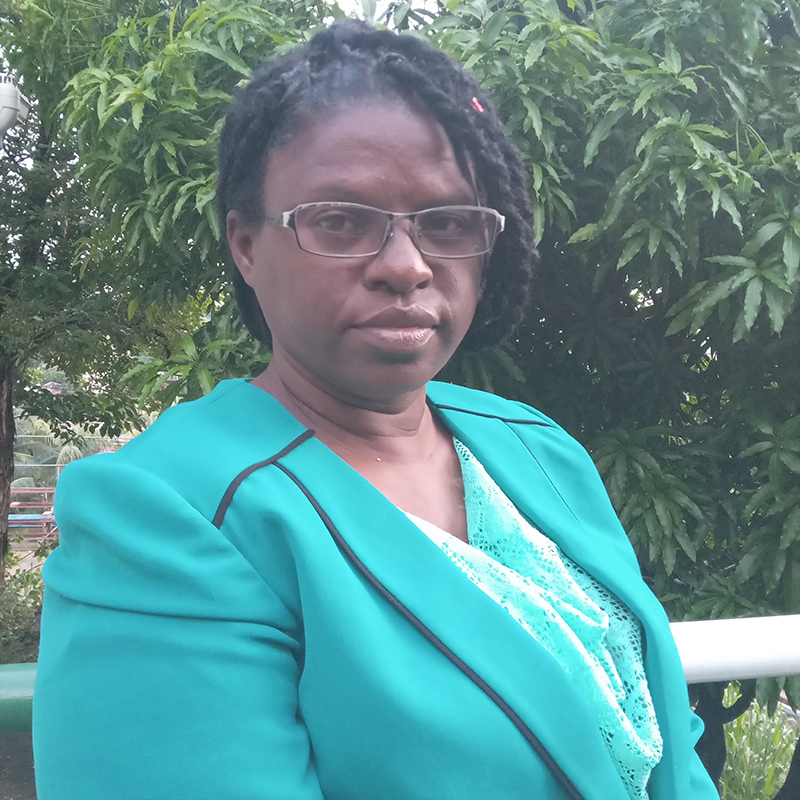
Ms Glenda Gonzales holds a Bachelor of Science (B.Sc.) in Psychology from the University of the Southern Caribbean (USC), a Master of Science (M.Sc.) in Criminology from the University of the West Indies (UWI); and recently completed her Master of Philosophy (M.Phil.) in Criminology and Public Safety at The University of Trinidad and Tobago (UTT).
Ms Gonzales is a civic-minded individual who has been actively engaged in youth development for approximately three decades. She has worked alongside governmental and institutional agencies, localised community groups and non-governmental organisations (NGOs) on developmental and educational initiatives.
She has been an adjunct lecturer at USC for the past five years, and a consultant at Lillitian Educational and Research Services for the past three years. Ms Gonzales serves as a subject matter expert in the field of penology for online education, acting as a Project Implementation Officer for institutions such as United Nations Global Environment Facility. She founded the Victim Advocates for Justice organisation which assists youth intervention programs in East Port-of-Spain, Trinidad.
She has also pioneered the establishment of community initiatives and acted on the board of several community organisations which include the St James Empowerment Foundation, Spree Simon Community Development Group, Eastern Quarry Improvement Committee, Angelina Trace Community Group, Morvant Laventille Youth Agriculture Network, and a host of other change organisations at the local level.
Ms Gonzales holds a strong belief in community action for sustainable change and the power of education to transform the society. She continues to promote social change through education and youth development.
More Results


