
UTT Awarded ACP Innovation Project
Jun 27, 2023 | Views:209574 |
 Print Version
The University of Trinidad and Tobago (UTT) is proud to be the recipient of a grant in the amount of €399,372.15 to drive innovation to build greater resilience in Caribbean Coastal communities. Funded via the Organisation of African, Caribbean and Pacific States (OACPS) as part of the ACP Innovation Fund sponsored by the 11th European Union Development Fund, UTT is seeking via this project, to support sustainable development initiatives.
The project is entitled "Advancing Safety and Sustainable Environmental Transportation (ASSET)" and is facilitated under the 'Harnessing Innovative Technologies to Support Resilient Settlements on the Coastal Zones of the Caribbean' (HIT RESET) project.
Over the next two years, the activities within the project will seek to enhance climate change resilience by advancing safety, accessibility and environmental sustainability of the public transport system. Through our partnership with the mobile app, TTWeSafe, UTT will analyse data obtained and also share the effectiveness and efficiency of the app usage with the public. This project is a key facet in our support of research and development initiatives in Trinidad and Tobago.
Improving public safety can result in greater use of public transport by citizens, particularly women, as well as reduce the dependency of citizens on their private vehicles and, in so doing, directly reduce greenhouse gas (GHG) emissions and other air pollutants, traffic congestion and noise pollution. The data collected from the project is also beneficial for urban planning and GHG emissions calculations.
The ASSET project is led by Dr. Samantha Chadee, with a unique team of specialists: Dr. Natalie Persadie, Professor Festus Addo-Yobo, Mr. Adrian Lutchman, Dr. Laurice Phillips, Mr. Joel Houlder and Mr. Keron Gopaul. The University's International Office and Grant Funding team will also serve as the lead for grant administration, and monitoring and evaluation.
The project is an output of an academic-private sector partnership between The University of Trinidad and Tobago (UTT) and Upward Innovation Technology, Ltd.
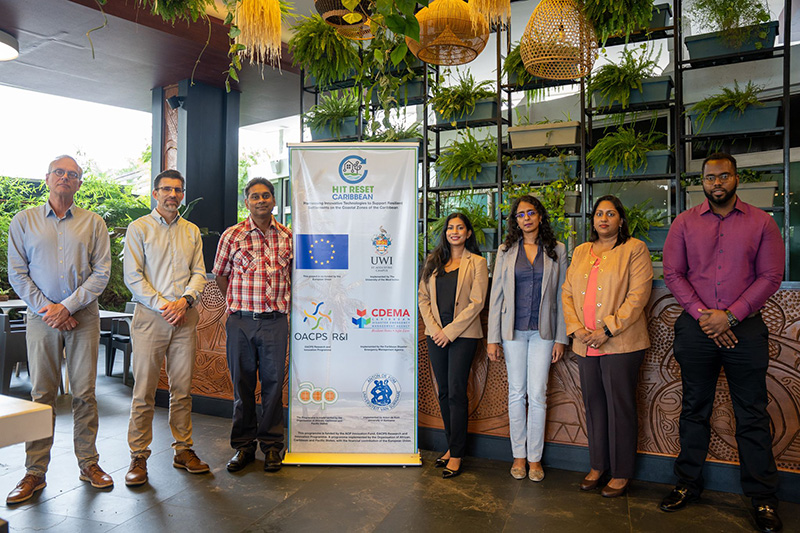
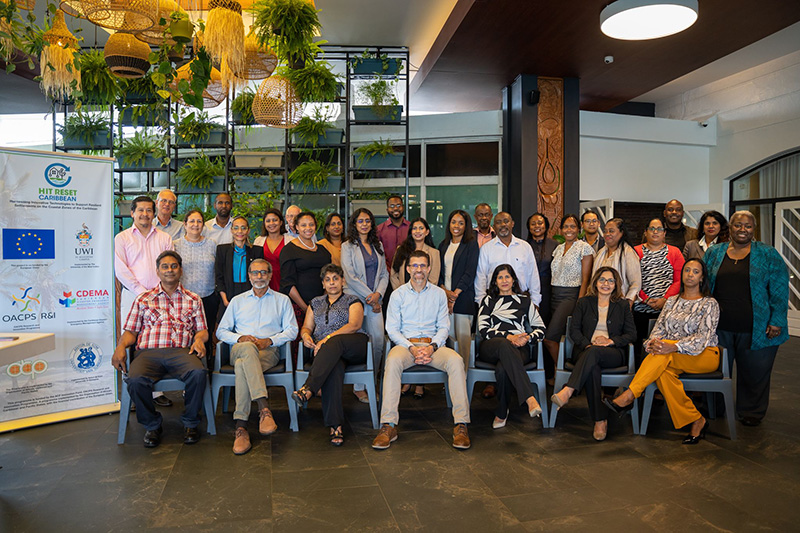
UTT wishes to extend gratitude to administrators of the HIT RESET grant, the University of the West Indies (UWI), the Caribbean Disaster Emergency Management Agency (CDEMA) and Anton de Kom University of Suriname.
More Results


