
Caribbean Maritime Trainers Strengthen Readiness for Alternative Fuels and New Technologies
Aug 17, 2026 | Views:415 |
 Print Version
Port of Spain, Trinidad and Tobago | 13 August 2026
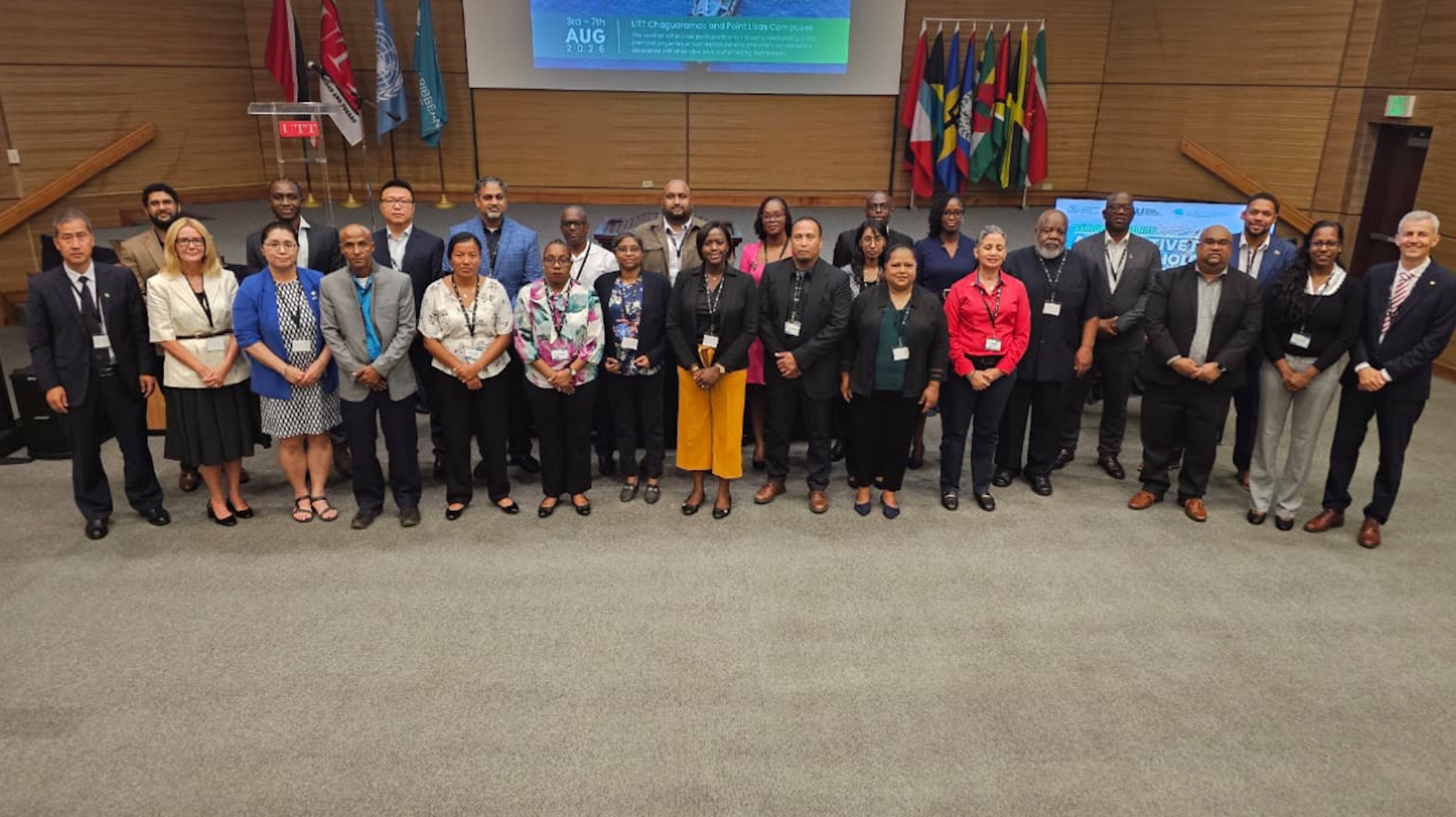
The Maritime Technology Cooperation Centre (MTCC) Caribbean, based at The University of Trinidad and Tobago (UTT), has successfully hosted a five-day regional seminar on Alternative Fuels and New Technologies for the Safe Operation of Ships, delivered in collaboration with the International Maritime Organization (IMO) and the World Maritime University (WMU). The seminar was held August 3 to 7, 2026 at UTT's Chaguaramas and Point Lisas Campuses.
The seminar brought together twenty-four participants from eight IMO Member States: Antigua and Barbuda, The Bahamas, Barbados, Belize, Dominica, Jamaica, Suriname, and Trinidad and Tobago, and included maritime educators, trainers and maritime administration officials responsible for seafarer certification and oversight. Women represented 54% of the cohort, reinforcing the importance of inclusive participation in developing the maritime workforce of the future.
The seminar was designed to equip trainers and prospective trainers with the knowledge, practical skills and competencies required to develop and deliver effective training for seafarers and shore-based personnel on the safe use, handling, and operation of alternative fuels and emerging maritime technologies.
Participants examined the technical, operational, and safety considerations associated with ammonia, methanol, and hydrogen as well as emerging technologies including battery-electric propulsion and onboard carbon capture and storage. An important focus was also placed on effective training delivery, covering course development, intended learning outcomes, adult learning principles, constructive alignment and assessment methodologies.
The seminar combined classroom instruction with risk management exercises, emergency response scenarios, and practical industry exposure. Site visits to Yara Trinidad Limited and PROMAN Trinidad Limited provided participants with first hand insight into safe handling and management of ammonia and methanol, including emergency procedures, personal protective equipment, safety systems and operational practices.
The seminar represents an important contribution to MTCC Caribbean’s wider mandate to strengthen regional capacity for maritime decarbonisation and support the safe adoption of alternative energies and new technologies.
Participants are expected to apply and share the knowledge and skills gained by developing and delivering training within their respective countries and institutions, helping to build a competent Caribbean maritime workforce capable of supporting the sector’s energy transition.
MTCC Caribbean remains committed to working with IMO, WMU and Caribbean Member States to strengthen the technical, institutional, and human resource capacity required for a safe and sustainable maritime energy transition.
More Results


