
Willingness to Report Crime to the Police: An Investigation into Mediator, Moderator and Predictor Variables
Sep 14, 2022 | Views:208858 |
 Print Version

Office of Research, Impact and Postgraduate Studies
presents
Willingness to Report Crime to the Police: An Investigation into Mediator, Moderator and Predictor Variables
an oral defence by Mr. Andy M. ShortIntroduction
The literature suggests that a significant amount of crime and victimisation go unreported. Unreported crime has several adverse implications for economically vulnerable, developing nations such as Trinidad and Tobago. Due to the reliance on Rational Choice Theory (RTC), the majority of research has yielded limited explanation of this phenomenon. Most of the associated significant independent variables were static, leading to decades of stagnation in the literature. The aim of this research is to re-energise interest in explaining crime reporting behaviours, by identifying mediator and moderator third variable interactions.
Objectives
The aim of the current research is to re-energise the field by applying Andrew F. Hayes’ variant of the Baron and Kenny (1986) mediation and moderation analytical method to determine the existence third variable interactions. This may lead to the identification of new causal variables and conceptual explanations for the changes in the dependent variable.
Data Methods
The study utilised a convergent parallel research design. The quantitative and qualitative data were collected, analysed and results presented separately; and then holistically discussed. Virtual focus groups and thematic analysis were used to collect and analyse the qualitative data respectively. The survey method was utilised to collect quantitative data. The instrument was a closed ended questionnaire and the sampling method utilised was snowball sampling – this was also done virtually. The use of the virtual space and non-probabilistic sampling was done in response to the COVID-19 pandemic.
Results
The virtual focus groups revealed that the decision to report crime to the police centred on the following six themes: Social Perception of the Police (sub-themes - Negative Labelling, Relationship and Effectiveness); Perception of Justice System; Sense of Safety and Security; Morals and Values; the Nature of the Crime; and Socio-demographics. The survey of 384 residents of the Northern Police Division was analysed using Andrew F. Hayes’ Method of Mediator and Moderator Analysis. Mode of Reporting was identified as a significant moderator of the interactions between the respective IVs Social Norms and Perceived Police Legitimacy and the DV - Willingness to Report Crime to the Police. The preferred mode of reporting is at the police station and in person.
Conclusions
The quantitative findings when explained within the context of the qualitative themes provide support for the Socio-Ecological variant of RCT. Based on this novel approach, there is sufficient evidence for future research exploring the RCT Socio-Ecological concept by examining third variable interactions within other populations using larger probabilistic samples.
Friday 16th September, 2022 at 2:00 p.m.

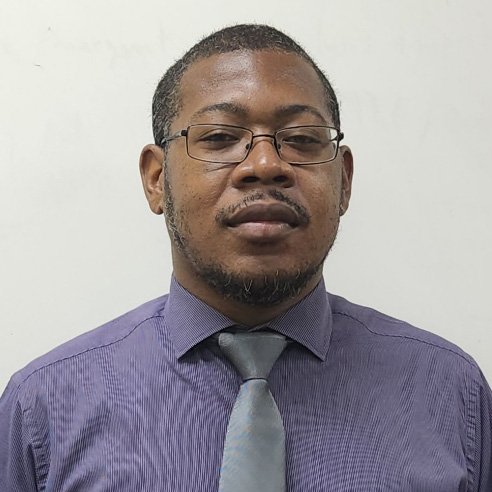
Mr. ANDY M. SHORT is a doctoral candidate at The University of Trinidad and Tobago’s (UTT) Institute of Criminology and Public Safety (ICPS). Mr. Short is a National Scholar who was awarded a Developmental Needs Scholarship by the Government of Trinidad and Tobago, to pursue a doctorate in the area of crime and security. Mr. Short is the holder of a Master’s of Science Degree (with distinction) in Criminology and Criminal Justice from the University of the West Indies (UWI) and a Bachelor’s of Science Degree in Psychology (with first class honours) from UWI.
Mr. Short also has some teaching experience in the areas of Criminology and Research Methods/Statistics. He tutored ‘Introduction to Criminology’ for two (2) years at UWI and provided thesis supervision services for several years at UTT in the Masters in Health Administration Programme.
Mr. Short has been employed with the Ministry of National Security for over fourteen (14) years and has contributed to various crime policies and strategies during that period. He has also undergone extensive training in several areas including Risk and Threat Assessments, Policy Development, Strategy Development, Applied Research, Crime Analysis, Horizon Scanning and Geopolitics. Additionally, Mr. Short received training in Countering Violent Extremism and Terrorism as a participant and representative of UTT for the 2018 academic cohort of the United States Embassy’s International Visitors Leadership Programme (IVLP) in Boston and Washington D.C.
Given his personal experiences and community of origin, Mr. Short has always had a passion for research which contributes to crime reduction and effective policing. His current research examines the impact of mediator and moderator variables on victims’ willingness to report crimes to the police. It is his expectation that his findings and recommendations can contribute to improving reporting rates locally.
More Results


