
A Resource Assessment on Underwater Current Harvesting in Trinidad and Tobago
Sep 29, 2022 | Views:208933 |
 Print Version

Office of Research, Impact and Postgraduate Studies
presents
A Resource Assessment on Underwater Current Harvesting in Trinidad and Tobago
by Ms. Darielle RobertsUnderwater Current Harvesting (UCH) is considered to be a relatively new phenomena in the Ocean Energy Industry. Ocean currents are the continuous, predictable, directional movement of seawater driven by gravity, wind (Coriolis Effect), and water density. Ocean water moves in two directions: horizontally and vertically. UCH is the use of technology to harness and store energy from the ocean currents. This is attainable based on the speed (strength) of the currents and the energy can be converted to electricity. Horizontal movements are referred to as currents, while vertical changes are called upwelling or downwelling. Underwater Current Harvesting can take place at any depth ranging from surface level to 5000 feet. However, ideal current speeds are measured at surface level, which is 0 to 100 feet deep. The total worldwide power in ocean currents has been estimated to be about 5,000 GW.
The implementation of UCH Technology will indeed reduce the carbon footprint of Trinidad and Tobago, help to combat the effects of Global warming and create a new revenue stream to help boost the economy.
Trinidad and Tobago is known for having strong ocean currents. Ocean currents are measured using Acoustic Doppler Current Profiler devices. For this study an analysis was done using data from different databases. These databases are compiled from data gathered as ships pass through our waters measuring different parameters including ocean current speeds. The HYCOM database was chosen for this analysis, since they had ships passing closest to our island. Further analyses were done to determine how sustainable these speeds are as the year progresses.
In this research it was found that Trinidad has ocean current speeds between 2m/s and 10m/s off of our west coast. Using the MIKE 2.0 Software a rose plot was able to show that these speeds are maintained throughout the year, making Trinidad one of the many nations with appropriate ocean current resource for harvesting energy from underwater currents.
Thursday 29th September, 2022 at 2:00 p.m.

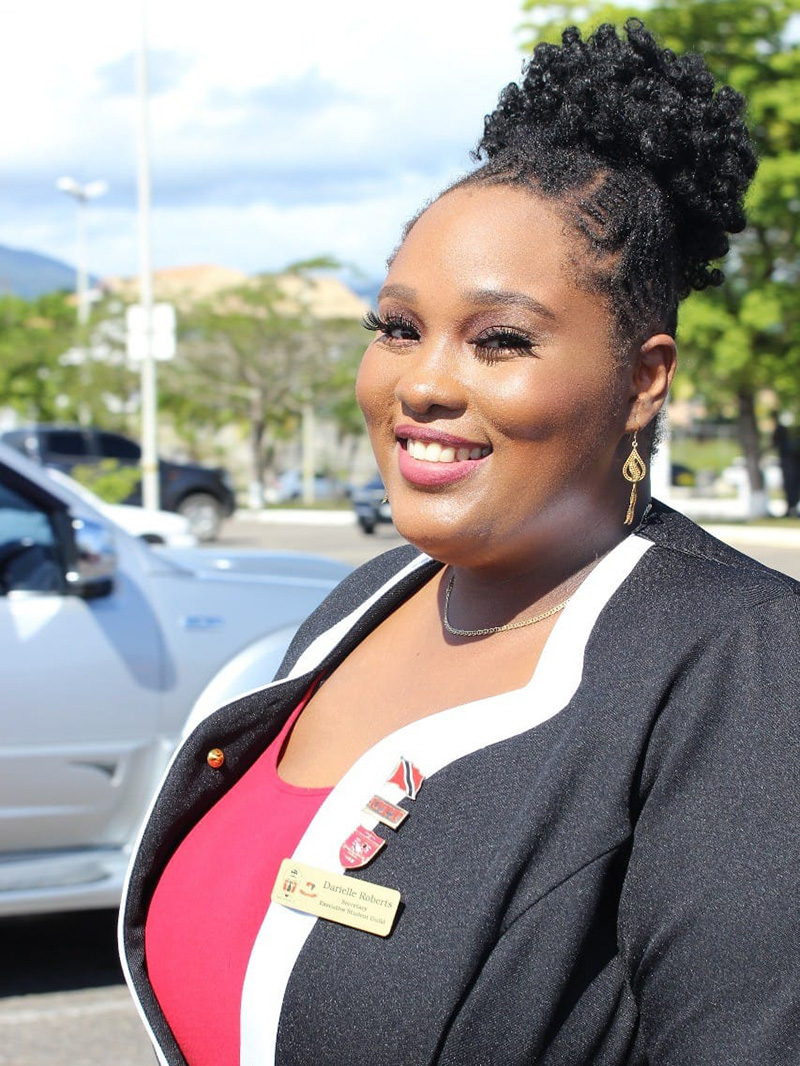
Ms. DARIELLE ROBERTS is a full-time teacher and dedicates her time to helping the upcoming generations find their passion and purpose in life. She holds a Bachelor of Applied Science (B.A.Sc.) in Process Engineering from The University of Trinidad and Tobago (UTT), where she graduated in 2020 and is a current Master of Philosophy (M.Phil.) candidate UTT. Her research is focused on Energy Engineering with emphasis on Marine Energy and Underwater Current Technology. Ms. Roberts’ goal is to develop the technology which will assist to transform the energy sector in Trinidad and Tobago by tapping into our natural ocean resource. Her aim is to help the twin-island to reduce their carbon footprint and find a new avenue for economic development of the island.
Ms. Roberts continues to devote her time to engineering research, tutoring, mentoring and debating. She has been a teacher in the private secondary school sector for the past four (4) years and continues to be passionate about education and the holistic development of our upcoming generations. She is also an advocate for youth empowerment through politics as she is a firm believer in the statement “The youth are the leaders of tomorrow.”
More Results


