
University Students Learn About Methanol as a Marine Fuel
Mar 22, 2017 | Views:209010 |
 Print Version
Bridging the gap between today's education and tomorrow's rapidly evolving employment landscape requires collaboration between education and employment stakeholders. Methanex in Trinidad recently demonstrated our support for this concept by hosting a knowledge-sharing session at The University of Trinidad and Tobago's (UTT) Maritime Studies Faculty in Chaguaramas, titled ‘Methanol as a Marine Fuel'.
The session examined the environmental, economic and technical factors that position methanol as a viable alternative fuel for marine vessels and was tailored to Marine Engineering, Navigational Sciences and Maritime Operations students.
It was an opportunity to create awareness of the growing use of methanol in energy applications and highlight how Methanex is leading the charge through the addition of seven (7) methanol-powered ocean-going vessels to the fleet of its subsidiary company, Waterfront Shipping.
A very interesting virtual presentation was made by our Brussels-based Manager, Market Development & Regulatory Affairs, Michel Hamrouni, who is leading Methanex's market development work in the marine fuels sector. Engine-related information was shared by Rene Laursen, Promotion Manager, from the global engine design giant, MAN Diesel & Turbo, who conferenced in from Denmark.
The world's first seven (7) innovative, clean-burning, fuel-efficient ocean-going vessels have been built with the first-of-its-kind MAN B&W ME-LGI 2-stroke dual fuel engines that can run on methanol, fuel oil, marine diesel oil, or gas oil.
Both presentations established methanol as a viable alternative fuel for ships that meet the industry's increasingly stringent emissions regulations. Methanol significantly reduces emissions of sulphur oxides (SOx), nitrogen oxides (NOx) and particulate matter and is available worldwide through existing global infrastructure. Students were particularly interested in the technology behind dual-fuelled marine engines. In addition to providing fuel flexibility, dual-fuel engines deliver high efficiency and reliability, low maintenance costs, long technical lifetime; and unchanged propulsion output.
Methanol as a marine fuel is a relatively new application and interest is growing globally. The two current commercial operations being led by Stena and Methanex's wholly-owned subsidiary, Waterfront Shipping, are perfect examples of companies looking to explore innovative ways to meet more restrictive global emission requirements for the marine sector.
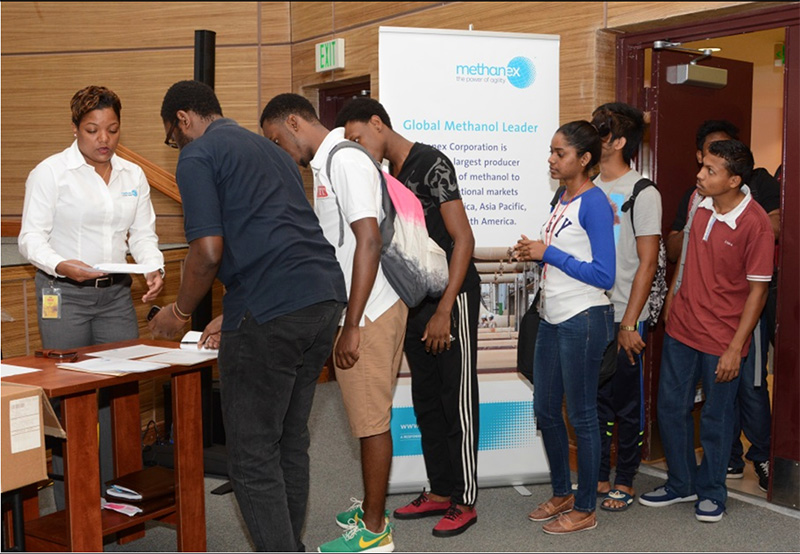 Staying ahead of the curve: UTT Marine Engineering, Navigational Sciences and Maritime Operations students register to join Methanex's webinar ‘Methanol as a Marine Fuel' at UTT's Chaguaramas campus on January 30.
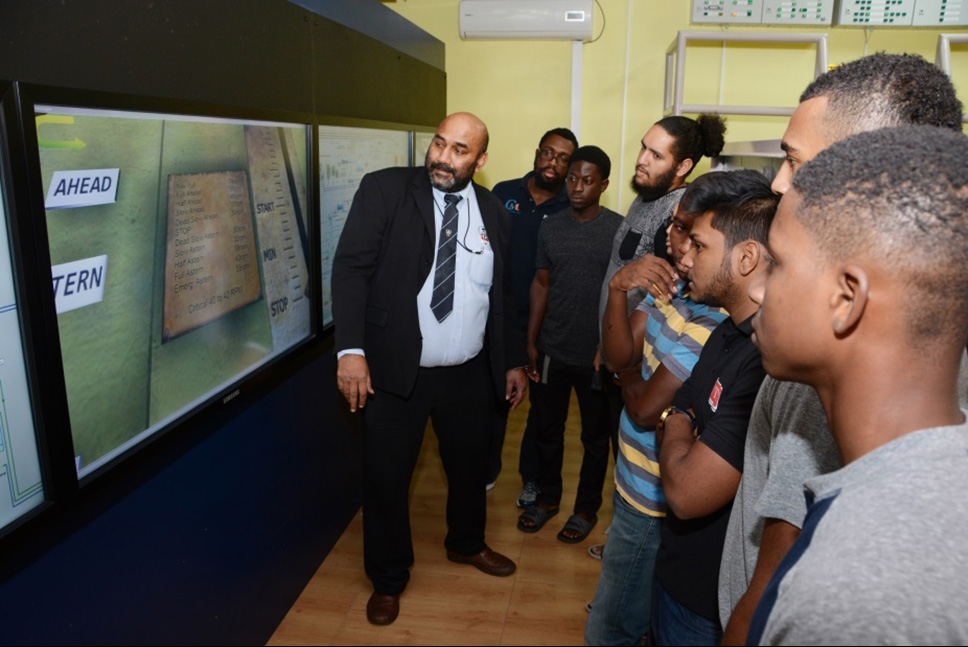 UTT's Maritime Studies Senior Instructor, Isikeli Waqa (left) identifies possible operational differences between current heavy-oil fuelled ships and new methanol-powered tankers with Marine Engineering diploma students at the University's state of the art Kongsberg Full Mission Engine Room Simulator.
More Results


