
Overview
One of the main tenets of quality assurance is the monitoring of processes and procedures with a view to continually improving key activities and practices over time. Continuous improvement techniques include a wide range of tools used mainly to correlate data gathered as a means of measuring performance along a quality continuum or roadmap. At UTT, the continuous quality improvement model is predicated on the institution’s QMS. This model promotes a cycle of Plan, Do, Study and Act to ensure a well-functioning and efficient QMS.
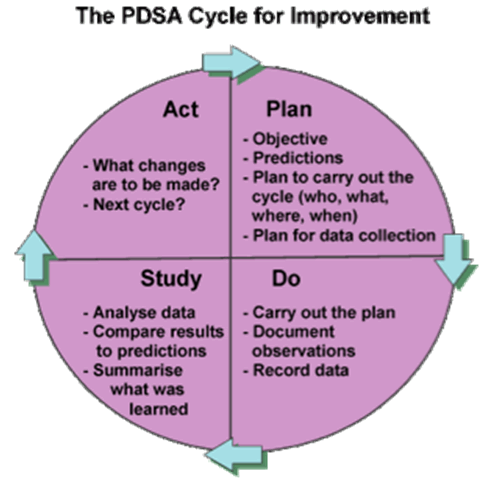
Source: http://www.apcc.org.au/about_the_APCC/the_model_for_improvement adapted from The Deming Cycle.
Internal approaches used by the institution to ensure continuous quality improvement include:
- A system for conducting internal quality audits
- A system of self evaluation
- Use of quality tools and techniques
Internal Quality Audits
The Quality Audit Policy describes the quality audit as ‘a formal evaluation activity that is integrated into the university-wide quality management system (QMS) of UTT, and is designed to help the institution in its continuous improvement efforts.’ The policy also states that this formal evaluation activity is carried out by the Office of Quality Assurance and Institutional Advancement in order ‘to determine whether the actions and results arising from the implementation of the QMS are achieving the desired goals and objectives.
Benefits of quality audits
Some benefits for conducting quality audits are to:
- Ensure are being conducted in accordance with the documented policies and procedures that actual practices
- Provide the organisation with an opportunity to identify areas for improvement
- Provide a measure and gauge for the existing quality system in relation to expectations and quality standards
- Provide an opportunity for benchmarking of best practices
- Serve as checks and balances for the organisational processes currently in operation.
What is the process for UTT?
The UTT process for conducting quality audits is in accordance with both the Quality Policy and the Procedure for Internal Quality Audits. The methodology would generally entail:
- A review of all existing documentation such as policies, procedures, forms, and other relevant documentation to assess adherence to the standards set in the particular area of focus
- A review of the actual practice against the written documents and standards
- A recommendation or set of recommendations for possible areas of improvement, and corrections to be made
- The identification of best practices that can be adopted by other units.


