Maritime Studies
UTT and MTCC Caribbean Present on Carbon Intensity Indicator at IMO Session in London
2616 views Print version (opens in a new tab)
The University of Trinidad and Tobago (UTT) and the Maritime Technology Cooperation Centre (MTCC) Caribbean have completed a technical study which examined the relationship between the Carbon Intensity Indicator (CII) rating and the voyage distances of a fleet of container ships trading exclusively in the Caribbean region. This study was requested by the Maritime Authority of Jamaica (MAJ) and commissioned by the Inter-American Development Bank (IADB) for the Caribbean Shipping Association (CSA). The study is one of the few that focuses on the Caribbean region and one of the first to examine and document the impact of the International Maritime Organization's (IMO) short term measure, the CII, to the Caribbean region.
The CII is a vital metric introduced by the IMO to assess the energy efficiency and environmental performance of ships, and key findings of the study indicated that the CII rating of the ships are negatively impacted due to the Short Sea Shipping (SSS) nature of maritime trade in the region.
The executive summary of the study's report is the appendix to the first Caribbean-led submission related to the IMO's short-term greenhouse gas (GHG) reduction measures to the IMO's Marine Environmental Protection Committee (MEPC). The submission was made by Caribbean states; Antigua and Barbuda, Jamaica, Saint Kitts and Nevis, Saint Vincent and the Grenadines, and Trinidad and Tobago and accepted as MEPC 82/INF.48.
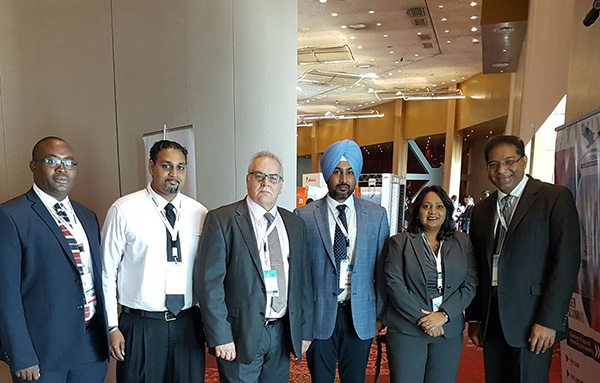
The study was presented by Mr Stephan Nanan, Senior Instructor at UTT's Centre for Maritime and Ocean Studies, and Deputy Director and GHG Adviser at MTCC Caribbean, at MEPC's 82nd Session at IMO Headquarters in London. This marks a significant moment for UTT, as it is the institution's first contribution toward reshaping international maritime standards.
This study offers key technical recommendations for IMO's consideration during MEPC's review of the CII framework. Contributions of this nature are uncommon from developing states, highlighting the degree of technical expertise brought forward by MTCC Caribbean and the region as a whole. This level of input demonstrates a growing capacity for the Caribbean to shape international maritime policy.
Overall, this contribution reflects UTT and MTCC Caribbean's commitment to advancing environmental sustainability in the maritime industry, while reinforcing the region's voice in global policy discussions.