UTT Main Website
Exploring Perspectives About the Impact of Entrepreneurship Mindset Development within...
4595 views Print version (opens in a new tab)

Office of Research, Impact and Postgraduate Studies
presents
a Postgraduate Seminar titled
Exploring Perspectives About the Impact of Entrepreneurship Mindset development within Tertiary Business Education, on Business Creation and Growth: A Multi-method Study in the Republic of Trinidad and Tobago
by Ms Del Marilyn Phillips
Entrepreneurship Mindset (EM) development within tertiary education is significantly correlated to the creation and sustainability of businesses. Therefore, this study aims to explore perspectives from entrepreneurs with business and related degrees on the factors that influenced their EM development for business growth in Trinidad and Tobago.
The study's relevance coincides with the global call for nations to create innovative, sustainable business as indicated in Goal #9 of the United Nations' Sustainable Development Goals (UNSDGs). Governments worldwide have facilitated collaborations between global, regional and national agencies, and educational institutions to promote EM development within tertiary education. More specifically in Trinidad and Tobago, the creation of the National Entrepreneurship Development Company (NEDCO) in 2002 to provide a range of support services for Small and Micro Entrepreneurs (SMEs), is noted. Additionally, three tertiary providers in Trinidad and Tobago, supported by NEDCO, have incorporated curriculum redesign initiatives and pedagogical strategies aimed at fostering EM development in their business students. However, a Trinidad and Tobago Global Entrepreneurship Monitor Report in 2015 found that 24% of new entrepreneurs were educated at the tertiary level, raising concerns about the impact of EM development strategies in tertiary business education, on business creation and growth.
This mixed methods study will blend quantitative and qualitative methods to explore the impact of the collaborative strategies employed by educational institutions, toward the development of the entrepreneurship mindset from the perspective of actual entrepreneurs. Undergirded by the constructivist perspective, the deductive analysis aims to explore the relationships between tertiary education and EM development, and EM development implications for curriculum and business policy formation. More importantly, the study's findings would propose recommendations for EM development that may increase the numbers of tertiary educated entrepreneurs participating in the creation of growth businesses in Trinidad and Tobago.
Wednesday 5th November, 2025 at 2:30 p.m.


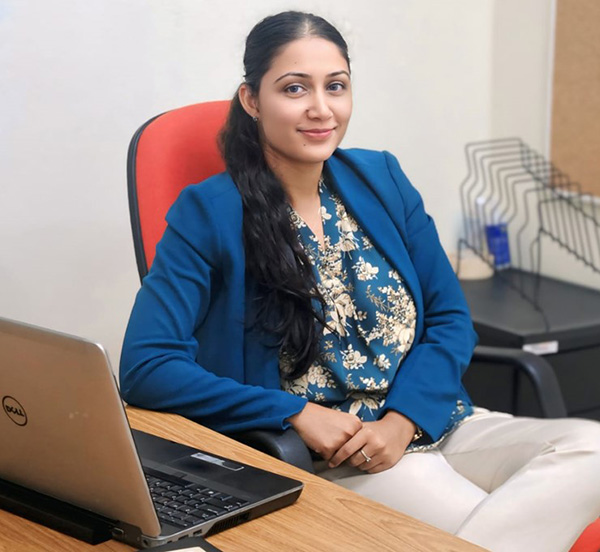
Ms Del Marilyn Phillips has over twenty-five years of professional experience and service in the field of Business Administration, and continues to provide managerial expertise at the University of the Southern Caribbean (USC). Her academic qualifications span the fields of marketing, communications, public relations, protocol and events management.
She is a trained business educator with certification in e-learning and teaching. Her competence in these specialist areas is supported by her educational achievements, having received a Master of Business Administration (MBA) from Andrews University Michigan, USA, a Postgraduate Diploma in International Relations from the University of the West Indies, a group Diploma in Marketing, Public Relations and Advertising from London Chamber of Commerce and Industry, and a Diploma in Event Protocol from the University of the West Indies' Institute of Business.
Currently, she is an Assistant Professor in the School of Business and Entrepreneurship at USC, where she brings her broad-based management experience to the face-to-face and online classroom.
As a research enthusiast Ms Phillips has presented several papers to local and regional audiences, and is a research partner on two published papers. Her passion for improving her students' entrepreneurship potential is the inspiration for doctoral study at UTT.