Aviation
UTT Launches the Caribbean Centre of Expertise in Aviation Safety (CCEAS)
211004 views Print version (opens in a new tab)
Click on image for pdf version
 The importance of aviation safety is paramount to the sustainability of the international aviation industry. With every air traffic accident, persons become more hesitant to fly, which can result in financial losses for the airline industry. It was only this week that the world was shocked at the news of the Southwest Airlines flight from New York to Dallas that made an emergency landing in Philadelphia after one of its engines exploded, sending shrapnel through a window. One female passenger was determined to have been partially pulled through the window opening, resulting in the loss of her life. Air safety is a current and systemic concern for the aviation industry and this week's tragedy highlights this fact.
The University of Trinidad and Tobago (UTT) recognises this pressing concern and, being responsive to the needs of the local aviation industry, has established the Caribbean Centre of Expertise in Aviation Safety (CCEAS). This centre is a multi-disciplinary research group, operating within UTT, which is designed to carry out research into issues of aviation safety while focussing overall on the very high levels of system integrity. This will be achieved by bringing together a range of disciplines, in particular Systems Engineering, Mathematics and Human Factors, which will all be used in tandem to address safety concerns. Incorporating best technical practices in systems engineering, design, reliability, maintainability and operation used in conjunction with best practices in safety engineering, human factors and inter-operation with external systems will prove to be impactful. These systems will all contribute to a high level of integrity which further emphasises optimum levels of safety. Initial work of the CCEAS will focus on the application of mathematical methods to airline safety. These techniques, applied to technical areas within the aviation industry, have been highly successful in reducing the risks of technical failures that may occur in the air. It is highly probable that, with further development, they may be applied to the piloting system with equally beneficial results.
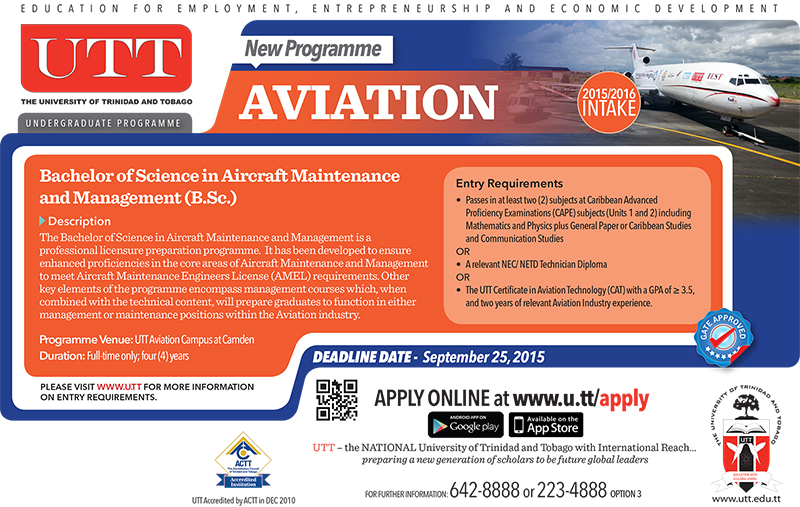
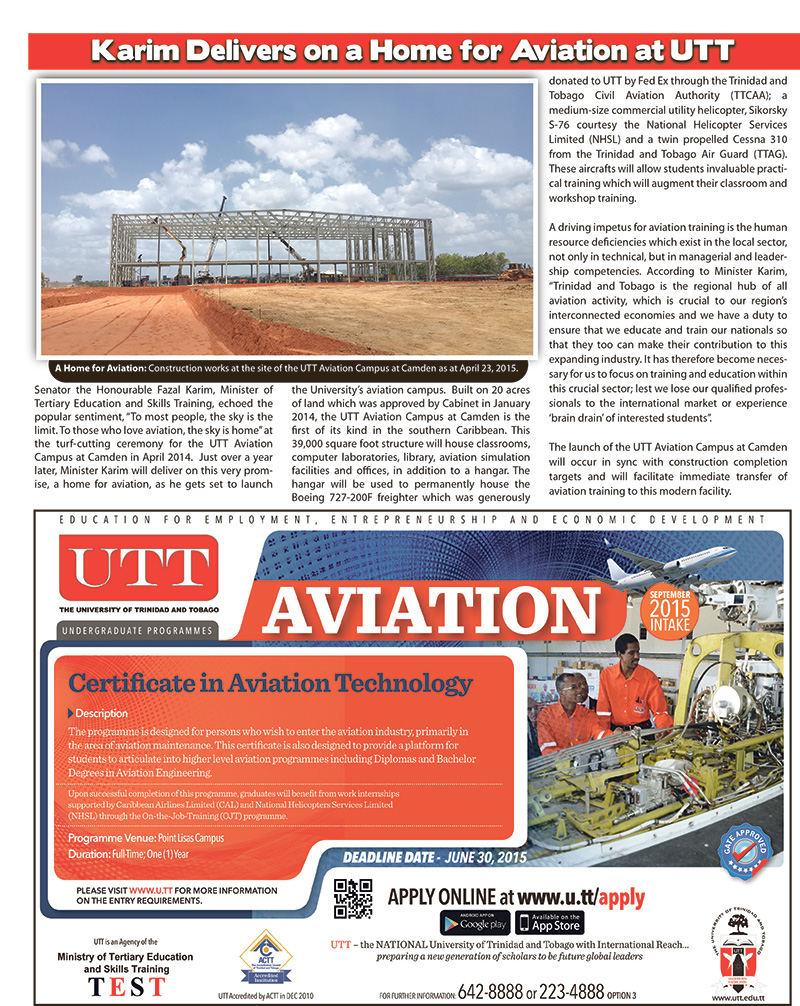
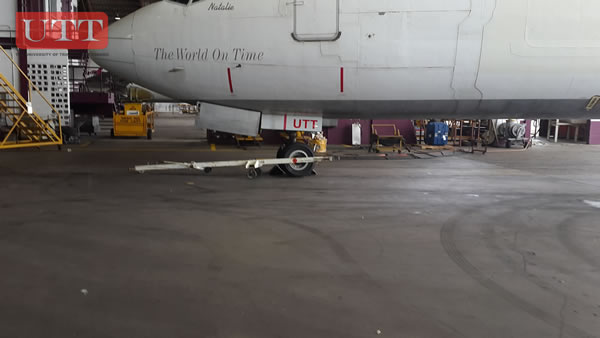
Further work will address the fact that the rate of aircraft accidents throughout the world has reached a plateau. Despite on-going technical developments, the accident rate has remained virtually steady for over two decades. Additional research can lead to new methodologies, which can restore the steady improvement that prevailed over the first six decades of flight. Air transportation, and more importantly safety in the skies, is everyone's business. As the regional forerunner for aviation training and education, UTT is doing its part to impact this industry. UTT currently offers the Bachelor of Science (B.Sc.) in Aircraft Maintenance and Management and, in September 2018, will offer the Bachelor of Science in Aeronautical and Airworthiness Engineering, which is to be presented for accreditation by the Royal Aeronautical Society. Plans are also apace to have the UTT Aviation Campus at Camden certified by the Trinidad and Tobago Civil Aviation Authority (TTCAA) followed by certification by the European Aviation Safety Agency (EASA).