
Introduction
Solving local problems with solutions that can be applied globally.
General Areas of interest in this research group
-
Renewable Energy Applications
- Ocean Wave Energy
- Wind Energy
- Solar applications
-
Control applications
- Hydraulic simulators
- Food production
- Household mechanisms (Assistive furniture for home patients)
-
Alternative Energy storage and usage
- Reducing heat load on roofs by using the energy
- Wasted heat energy from Air conditioners

Dr. Aneil Ramkhalawan- Lead Researcher
His doctoral work entailed the development of a novel hydraulic based Heaving Wave Force Simulator. It was created to fill the gap of the lack of a wave pool in the Caribbean region and to assist in the testing phases of heaving wave energy devices before testing out at sea. A low cost (<< cost of wave pool) prototype was designed, fabricated and tested to help improve safety, efficiency and cost effectiveness of the devices. The device can simulate the heaving response of a buoy on deep water ocean waves. Firstly, a mathematical model of a heaving device coupled with wave data was developed using Matlab/Simulink and validated via wave data from the South Eastern Coast of Trinidad (courtesy Coastal Dynamics). The Simulator was then designed using a hydraulic system and developed using Automation Studio. Finally, the validated mathematical model was used to control the Heaving Wave Force Simulator to replicated real-world wave conditions.
The prototype Simulator simulates the displacement of the heaving body with an associated force. A PID controller was used to govern the motion of the hydraulic actuator with the error being +/- 3%. The success of the prototype demonstrates the feasibility of using a Heaving Wave Force Simulator as a new option for testing heaving wave energy devices.
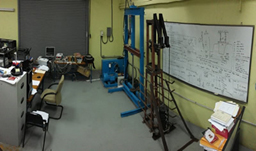
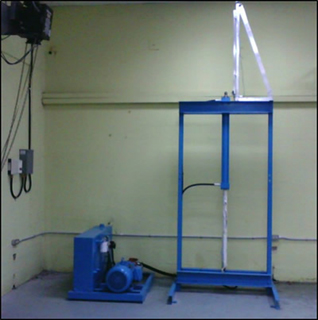
Dr. Ramkhalawan is an Assistant Professor at The University of Trinidad and Tobago (UTT), for the past ten (10) years in the Mechanical Engineering, Manufacturing and Entrepreneurship Unit (MME). His research area is wave-powered desalination with specific interest in the application and modelling of heaving buoys on the ocean waves for Renewable energy purposes. His doctoral work from the Design and Manufacturing Engineering department was in the area of controls and renewable energy with specific interest in Ocean wave energy devices and simulators. He is also doing work in the field of PID controls and its application to hydraulic systems. He also does teaching, conducts laboratory exercises and assists in student projects at UTT for courses such as Engineering System Dynamics, Engineering Drawing, CADCAM, Mechatronics, Controls and Instrumentation, etc.
Group Members
- Mr. Ronnie Bickramdass (Ph.D. Candidate)
- Mr. Elias Mitchell (M.Phil./Ph.D. Candidate)
- Ms. Jeselle Gajadhar (B.Sc. graduate from MME)
Projects
Project Title: Design, build and test of an Automated Pastelle press
Student: Jeselle Gajadhar

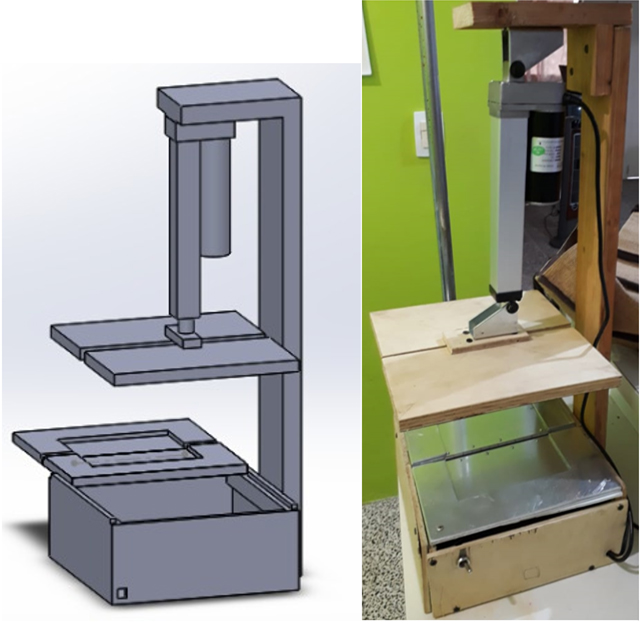
Project Description: Pastelles are a seasonal staple enjoyed primarily at Christmas time by Trinidadians. The making of pastelles has been a manual process involving long hours and laborious repetitive tasks to achieve the output. The ultimate goal was to design, build and test a prototype to assist pastelle producers with their output.
For this project, a time study of the processes involved was conducted by timing a few different pastelle makers to identify the average time taken for the various processes involved. From this study, the mechanized pastelle press was created based on a need to increase the production time of pastelles and decrease the energy input on pastelle makers.
Publication: Gajadhar, J., Ramkhalawan, A. and Bisnath, J. (2020). "A Time study of the Pastelle making process: An Investigation aimed at reducing labour and time", International Conference on Emerging Trends in Engineering & Technology - 2020 (IConETech-2020), St. Augustine, Trinidad and Tobago, The University of the West Indies.
Project Title: Design, build and test an Automated car park barrier
Student: Joshua Ross

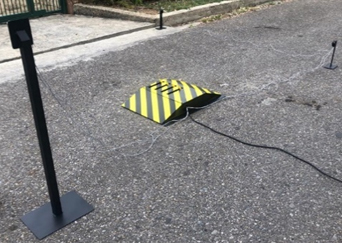
Project Description: Parking a motor vehicle has become an increasing problem on a global scale. To develop a precise and sufficient understanding of parking limitations and the main challenges associated with the lack of availability of parking spaces in car parks. This entailed an investigation of patents and existing designs to understand the design requirements needed to develop a prototype device that will allow users that are permissible to enter the designated area. In order to successfully design, build and test such a device, many factors were considered such as expenses of material to be used, installation of actuators and receivers, and the type of mechanism that would be used to activate the device for persons to enter and leave the designated area. This prototype device was built and tested for use in parking lots that require a zone meant only for persons that are permitted to park.
Video Demo
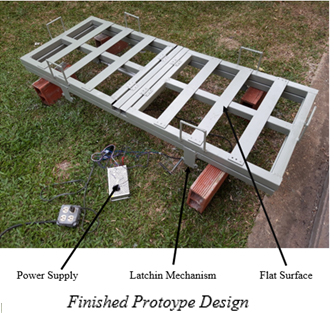
Project Title: Design, build and test a Retrofit reclinable bed frame for patients at home
Student: Nichel Woods

Project Description: In Trinidad and Tobago caregiving at home is a common occurrence but it can also be inconvenient. In cases where a patient may be ill, bedridden or elderly, they may find themselves unable to move about as easily as they would like either with or without a caretaker’s assistance. This includes manoeuvring in and out of bed. One of the major factors in caregiving is the quality and condition of equipment used to tend to patients. Whether it be in a hospital, nursing home or in the comfort of one’s residence, certain equipment can prove critical in the quality of care a patient receives.
Unfortunately, there aren’t many products in the market that specifically target aiding the manoeuvring of bedridden patients for home use and in cases where they are, tend to be very costly. Devices such as reclining beds are more often found in hospitals and are very expensive to import for home use by an individual or small business.
This project is intended to offer a solution to this problem where persons with limited mobility and are unable to move freely in bed can have assistance in getting in and out of bed. The proposed solution is to design build and test an affordable actuated reclining remote bed frame that can be attached on an existing bed frame.
Video Demos
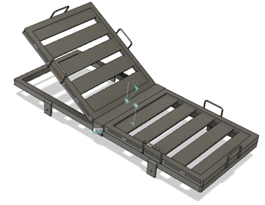
Computer Generated Drawing of Final Prototype Build
Project Title: Design, build and test of an ocean wave energy conversion device
Student: Elias Mitchell

Project Description: Trinidad and Tobago is currently one of the largest producers of greenhouse gases per capita in the world, being second to Qatar on the world standings. This country has been solely depending on oil and gas both as an energy source and as the major driving force of our economy. This dependence on fossil fuels for over one hundred years has resulted in harmful environmental effects. Renewable sources of energy in this twin island republic such as solar, wind and ocean wave energy can help reduce our dependency on fossil fuels and thus reduce its environmental effects. Various studies both regionally and globally has shown that wave power has the highest energy density compared to other renewable sources but if harnessed efficiently can prove to be a viable energy option.
The proposed design was developed using literature and patent review along with gathering wave data from the North and South coast of Trinidad and Tobago. Mathematical models were developed using the data collected to aid in the development of the proposed design. Wave data off the North coast was used to design a prototype of a wave energy device to generate electricity. Devices placed in the path of ocean waves experience six degrees of freedom of motion. These are heave, pitch, surge, yaw, sway and roll. This prototype was designed to convert the energy from the oscillating wave surges to electrical energy.
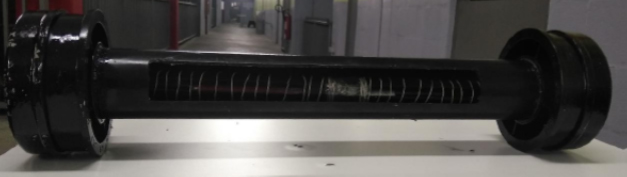
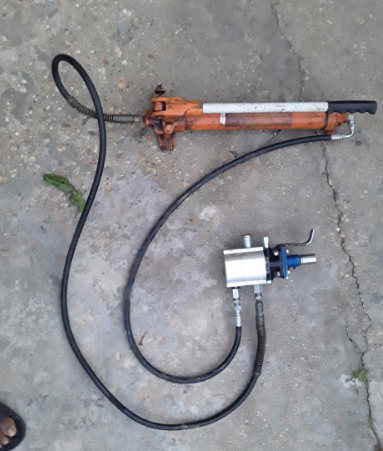
Project Title: Design, build and test of a Manual hydraulic lug nut breaker
Student: Naquis Noel

Project Description: The aim of this project was to design, build and test a manual hydraulic lug nut breaker to assist heavy vehicle drivers. This prototype was designed to reduce the intensive work output required by the drivers to remove and replace the lug nuts when encountered by a flat tire. Musculoskeletal disorders (MSD) or related conditions are normally as a result of very laborious and "backbreaking" work, regardless of age or size.
Based on the findings, it was seen that there are over 100,000 trucks in Trinidad and Tobago. There are few manual devices on the market that assist or reduce the force required to loosen or tighten the lug nuts. These are various wrenches that require intensive man power to produce the required force. There are powered tools available but are costly and require additional power packs with associated logistics required.
This prototype eliminated the need for additional power whilst creating the required force by using a closed loop hydraulic system designed with a driven gearing system to remove and replace the lug nuts.
Publications
Journals
- Persad, P., Sangster, N. and Ramkhalawan, A. (2016), "Design and Development of a Novel Heaving Wave Force Simulator", The Journal of The Association of Professional Engineers of Trinidad and Tobago (ISSN 1000 7924), Engineering for Sustainable Development in the Caribbean, Vol. 44, No. 1, April/May 2016.
- Persad, P., Sangster, N., Cumberbatch, E., Ramkhalawan, A. and Maharajh, A. (2011), "Investigating the feasibility of solar powered irrigation for food crop production: A Caroni case", The Journal of the Association of Professional Engineers of Trinidad and Tobago, Vol.40, No.2, October/November, pp.61-66
- Cheddie, D., Maharajh, A, Ramkhalawan, A. and Persad, P. (2010), "Transient modelling of wave powered reverse osmosis", Desalination, Vol. 260, Issues 1-3, September, pp. 153-160.
Conferences
- Sangster, N., Ramkhalawan, A., Maharajh, A., Bisnath, J., Cumberbatch, E., Bickramdass, R., Edwards D. and Persad, P. (2020). "Smart Irrigation Estimator", International Conference on Emerging Trends in Engineering & Technology - 2020 (IConETech-2020), St. Augustine, Trinidad and Tobago, The University of the West Indies.
- Gajadhar, J., Ramkhalawan, A. and Bisnath, J. (2020). "A Time study of the Pastelle making process: An Investigation aimed at reducing labour and time", International Conference on Emerging Trends in Engineering & Technology - 2020 (IConETech-2020), St. Augustine, Trinidad and Tobago, The University of the West Indies.
- Polisher, M., Cumberbatch, E., Ramkhalawan, A., Bisnath, J. and Maharajh, A. (2020). "Feasibility of Powering Manzanilla via a Wind Farm", International Conference on Emerging Trends in Engineering & Technology - 2020 (IConETech-2020), St. Augustine, Trinidad and Tobago, The University of the West Indies.
- Bisnath, J., Ramkhalawan, A., Cumberbatch, E., Persad, P., Maharajh, A., Persadie, N., Bickramdass, R., Soodeen, D. and Edwards, D. (2020). "Experiences of using a single assessment for both Practical Prototyping Skills and Introduction to Energy Engineering", International Conference on Emerging Trends in Engineering & Technology - 2020 (IConETech-2020), St. Augustine, Trinidad and Tobago, The University of the West Indies.
- Bisnath, J., Thielman, D., Ramkhalawan, A. and Edwards, D. (2020). "Aerial drone to harvest mangoes", International Conference on Emerging Trends in Engineering & Technology - 2020 (IConETech-2020), St. Augustine, Trinidad and Tobago, The University of the West Indies.
- Persadie, N., Sangster, N., Ameerali, A., Soodeen, D., Maharajh, A., and Ramkhalawan, A. (2020). "Integrated Approach to Masters Programme Delivery in Manufacturing and Design Engineering at UTT", International Conference on Emerging Trends in Engineering & Technology - 2020 (IConETech-2020), St. Augustine, Trinidad and Tobago, The University of the West Indies.
- Persad, P., Sangster, N. and Ramkhalawan, A. (2015). "Design and Development of a Novel Heaving Wave Force Simulator", APETT TECHNICAL CONFERENCE 2015, Engineering for Sustainable Development in the Caribbean, Trinidad and Tobago.
- Persad, P. and Ramkhalawan, A. (2011). Hydraulic based Wave Buoyancy Force Simulator. The International Association of Science and Technology for Development (IASTED), Power and Energy Systems and Applications - (PESA 2011), Pittsburgh.
- Persad, P., Ramkhalawan, A. and Maharajh, A. (2008). Potential Application of Wave Power in the Eastern Caribbean. (CAS: 065). Caribbean Academy of Science Conference, Grenada.
- Persad, P., Ramkhalawan, A. and Maharajh, A. (2008). Potential for Wave Power in the Caribbean. Tobago Gas Technology Conference, pp. 222-229.
Symposiums
- Ramkhalawan, A., Bisnath, J. and Ross, J. (2019). Automated Car Park Barrier. The University of Trinidad and Tobago Second Annual Research Symposium- Research to Promote Sustainable National Development, August 20th -21st.
- Ramkhalawan, A., Bisnath, J. and Mitchell, E. (2019). Wave Powered Energy Converter. The University of Trinidad and Tobago Second Annual Research Symposium- Research to Promote Sustainable National Development, August 20th -21st.
- Ramkhalawan, A., Bisnath, J. and Woods, N. (2019). Retrofit Recliner Bed Frame. The University of Trinidad and Tobago Second Annual Research Symposium- Research to Promote Sustainable National Development, August 20th -21st.
- Ramkhalawan, A., Persad, P. and Sangster, N. (2018). Prototype of a Heaving Wave Force Simulator. The University of Trinidad and Tobago Research Symposium, August 10th -17th.
Community Outreach
- Wharf Trace Water Relief Project (2020)
Acknowledgement
Dr. Ramkhalawan would like to thank BPTT for the award of a research grant which funded this research work, Coastal Dynamics for the provision of wave data and The UTT for supporting and promoting this research project. Special thanks to Prof. Prakash Persad for his supervision and Dr. Nadine Sangster for her mentorship. Also, special thanks to his colleagues and the members of the Mechatronics group for their continued support.
Links/Resources
Researchgate: https://www.researchgate.net/profile/Aneil_Ramkhalawan
Google Scholar: https://scholar.google.com/citations?user=DzoefOgAAAAJ&hl=en
Department: Manufacturing, Mechanical and Entrepreneurship Unit (MME)
Campus: Pt. Lisas Campus Office: AB 114: AB 106
Telephone #: 642-8888/223-4888 Ext# 21060
Email address: aneil.ramkhalawan@utt.edu.tt


