
Design Engineering Student Develops New Low-Cost Housing for Electronic Steelpans
Sep 11, 2017 | Views:212165 |
 Print Version
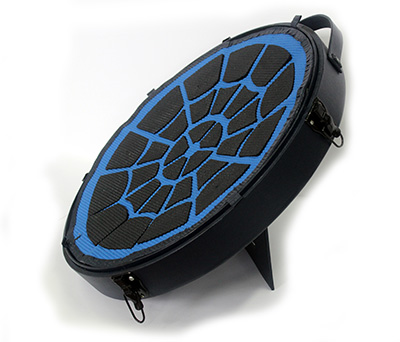
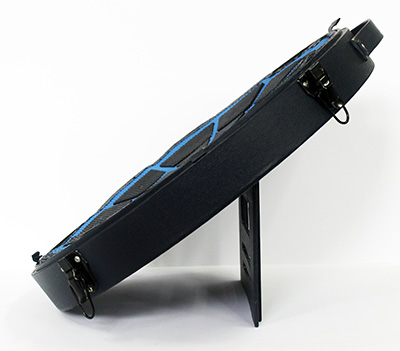
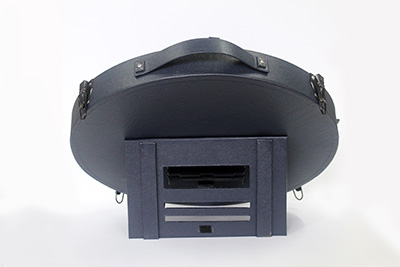
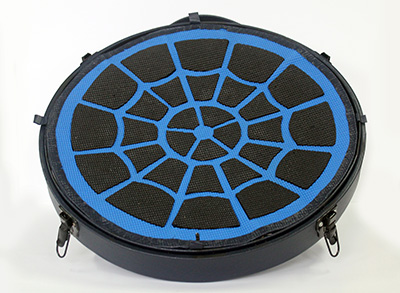
Recent developments in music technology have been applied to the traditional steelpan instrument resulting in innovations such as the E-Pan and the P.H.I. (Percussive Harmonic Instrument). However, these products remain expensive and out of the reach of many. Rochelle Welch, a graduate of UTT’s Design and Manufacturing Engineering programme, developed a new housing (Industrial Design) for electronic steelpans to address this need. An analysis of interviews conducted with musicians and music teachers showed that the traditional pan and existing pan devices were expensive and difficult to transport. By focusing on these issues of low-cost and portability, a range of conceptual designs was produced and a final design selected.
The design is circular being approximately 50cm in diameter with a total height of 9 cm when closed. It uses strawboard which is sustainable and relatively low-cost. The housing for the instrument incorporates a stand for the product and fasteners located around the outer rim to allow for easy attachment. To adjust the angle of the playing surface inside the case, the stand is located on the outside of the case where the user can easily adjust the height. Four (4) box clamps facilitate the removal of the whole cover for increased ease of use as well as two rope type handles for ease of transport. The case is covered in a water proof material for increased safety of the device while transporting.
Further development and production of this housing would enable pan learners and players to easily transport and use an electronic pan interface in different environments at lower cost. With the increased prevalence and accessibility of low cost and open source hardware and software, it is envisioned that the costs of electronic pan devices could be driven down further. This will result in such devices being accessible to more people and the possibility of home-grown technology being exported to the rest of the world. Welch was supervised by Dr. Umesh Persad, Assistant Professor Design and Manufacturing Engineering.
More Results


